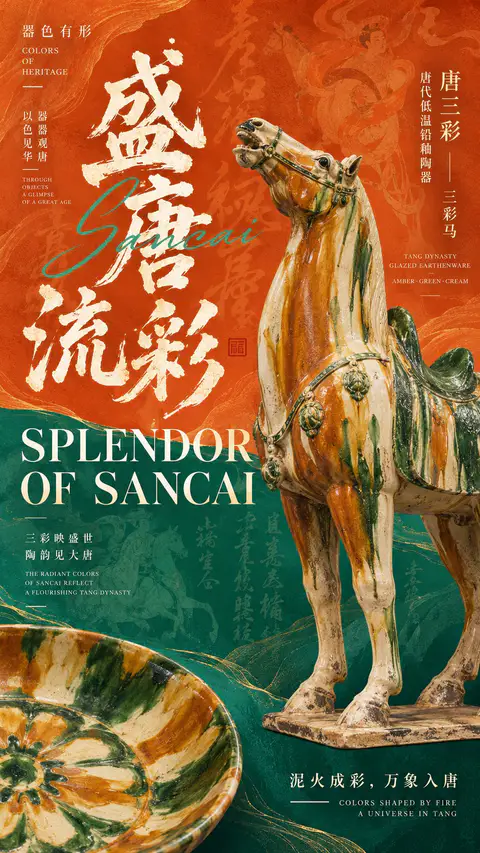
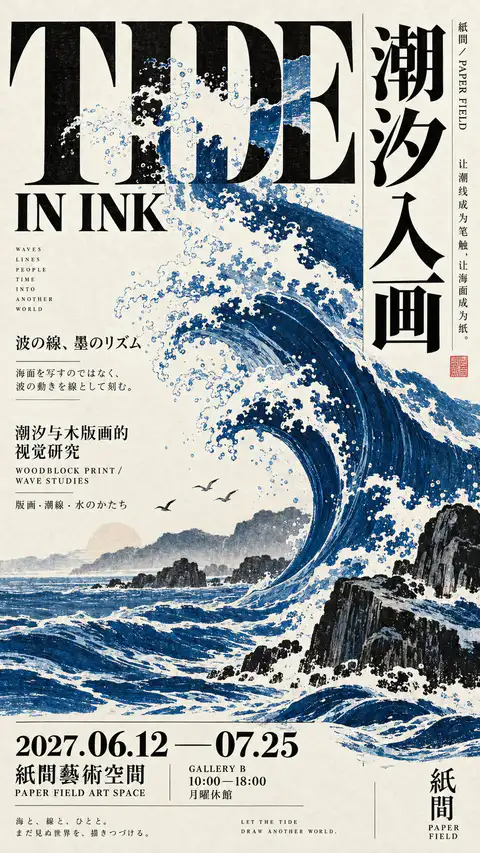
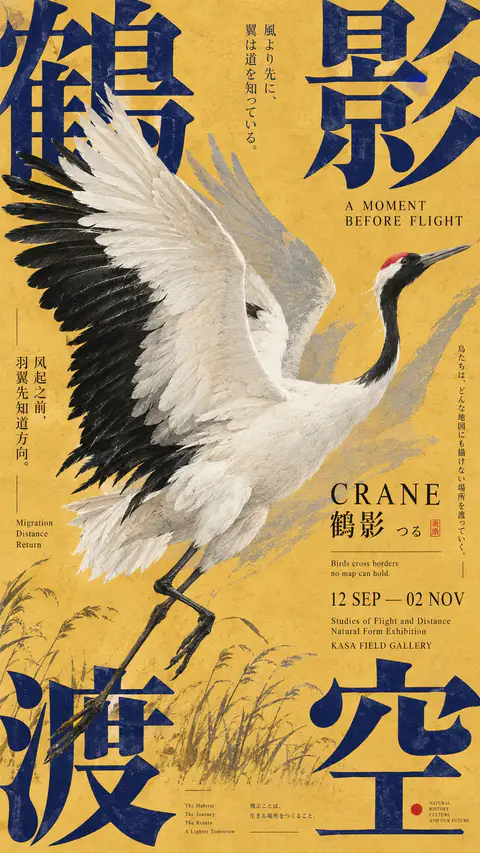
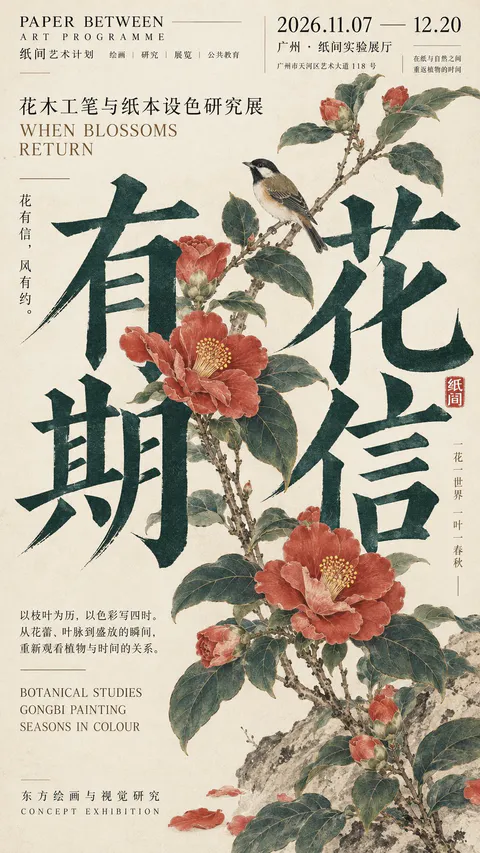
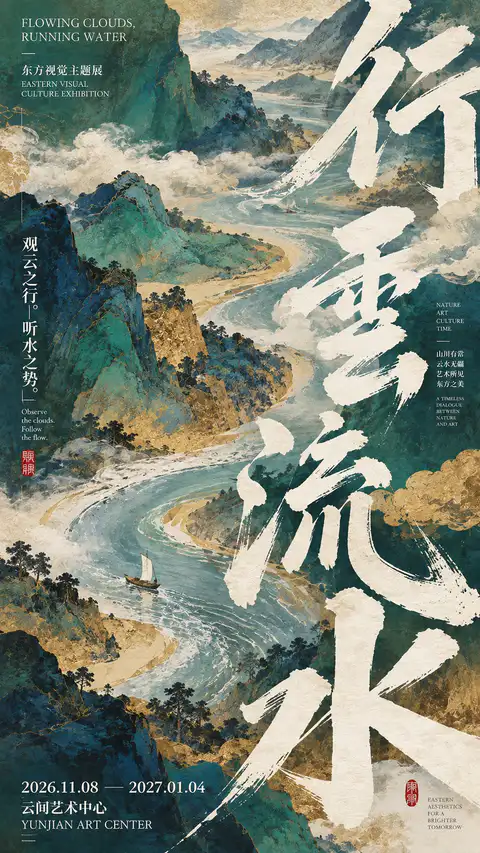
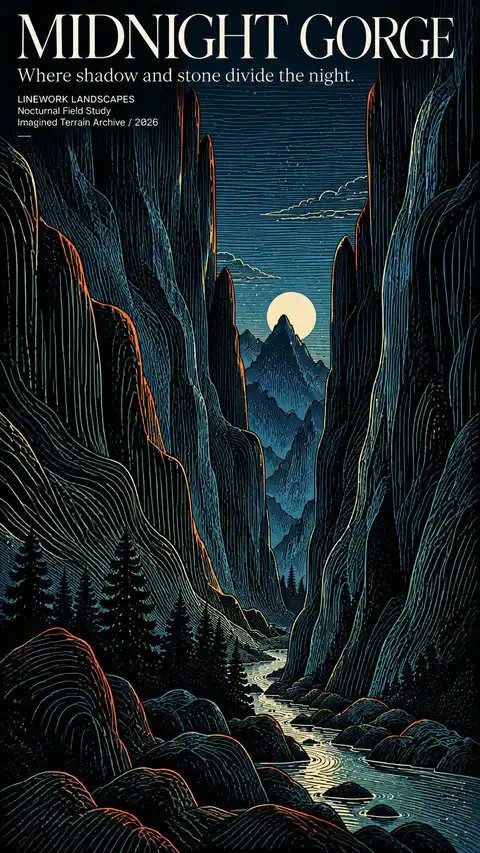
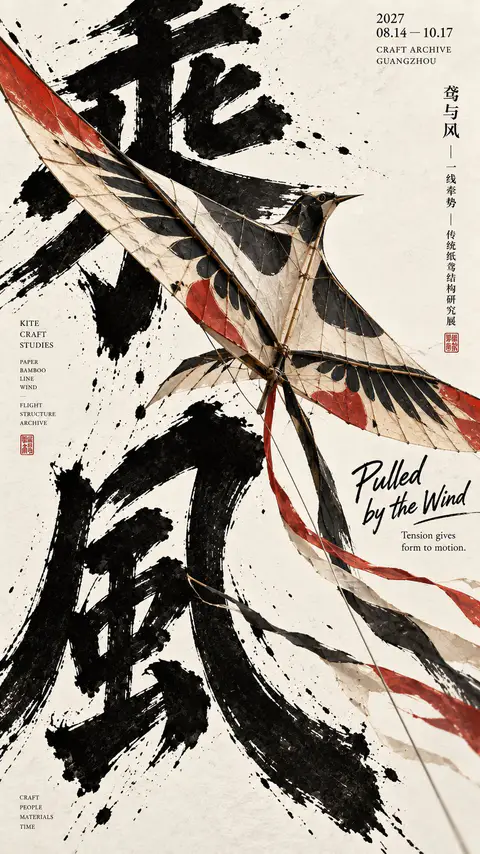
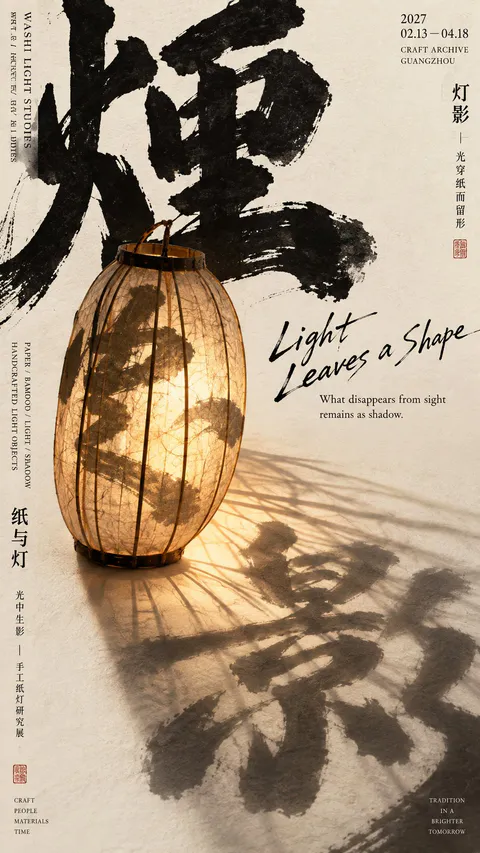
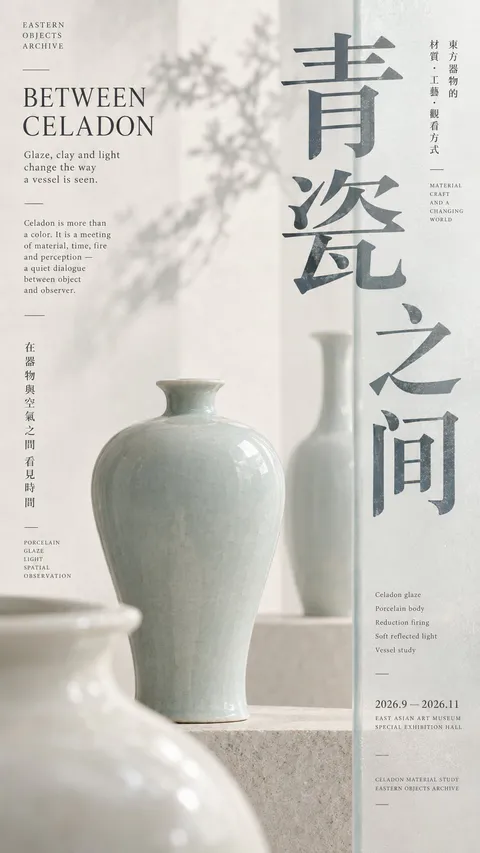
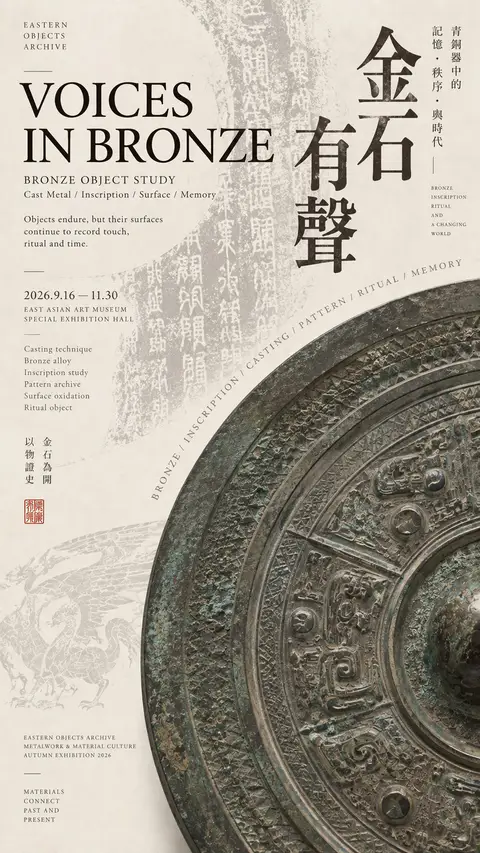
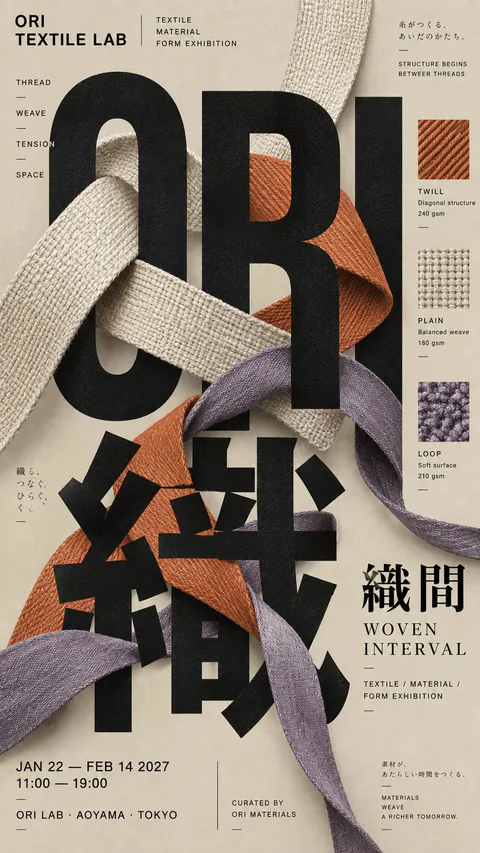
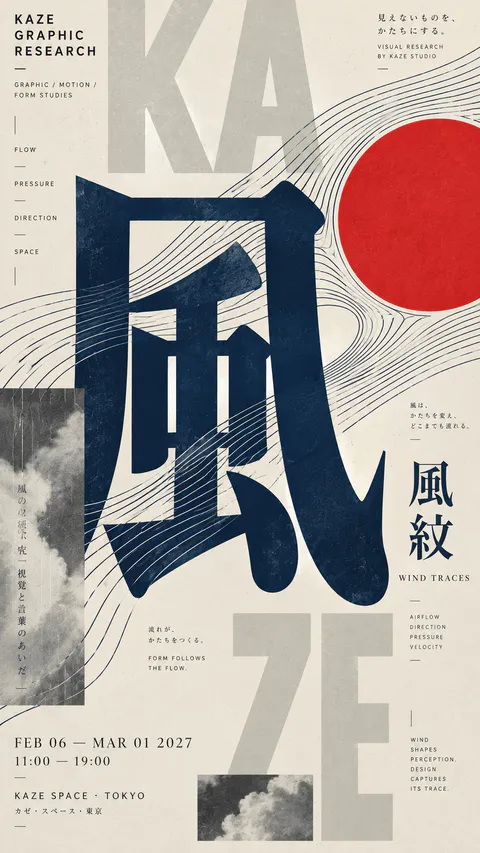
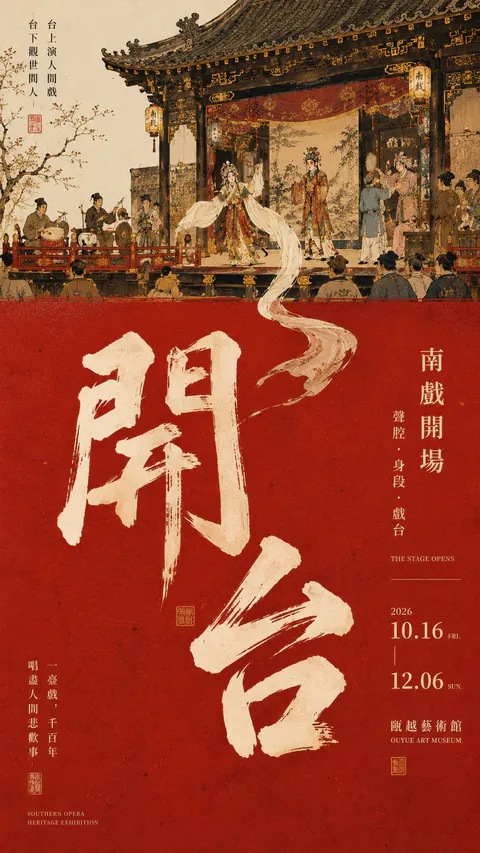
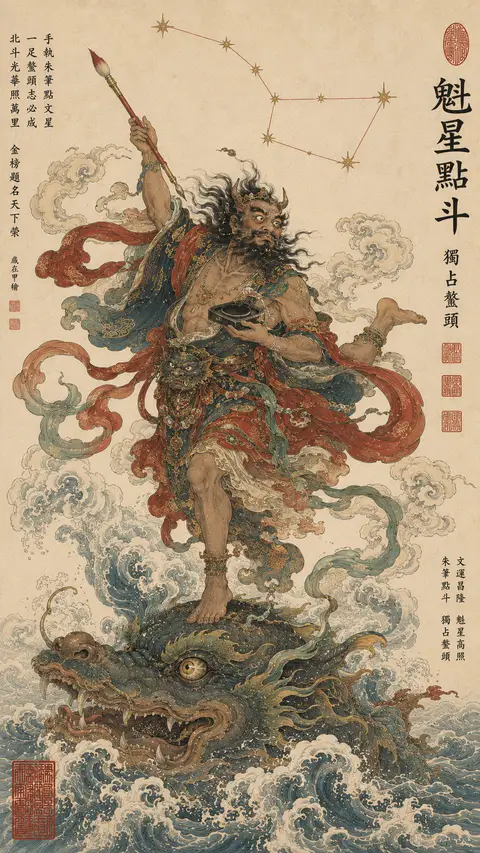
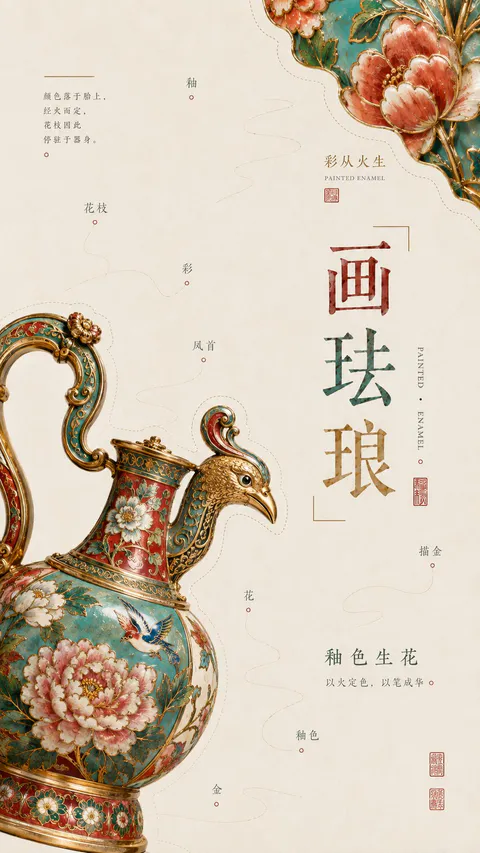
Create a premium 9:16 Japanese-inspired editorial poster using the following creative direction.

Theme: [Your exhibition, cultural event, or artistic concept]
Main Typography: [Large English, Chinese, or Japanese headline]
Visual Subject: [Wildlife, natural elements, printed materials, objects, or abstract forms]
Color Palette: [Choose 2–4 harmonious or contrasting colors]
Supporting Text: [Subtitle, dates, venue, and meaningful multilingual details]

Visual Style & Typography

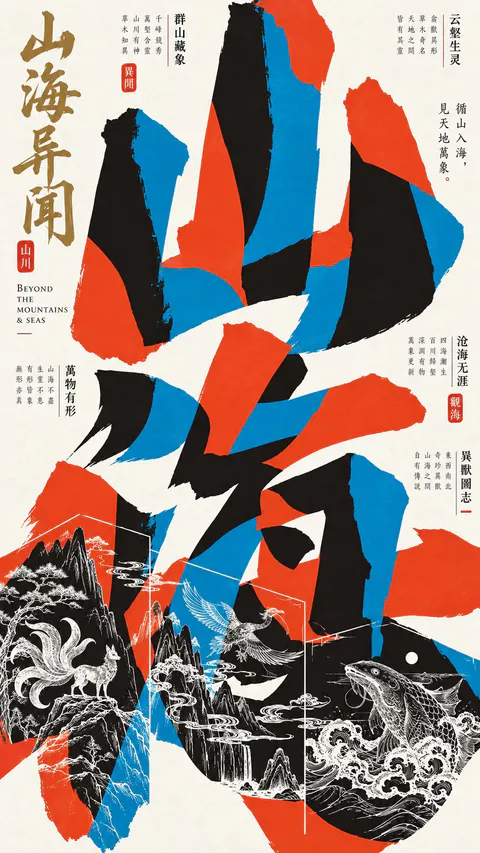
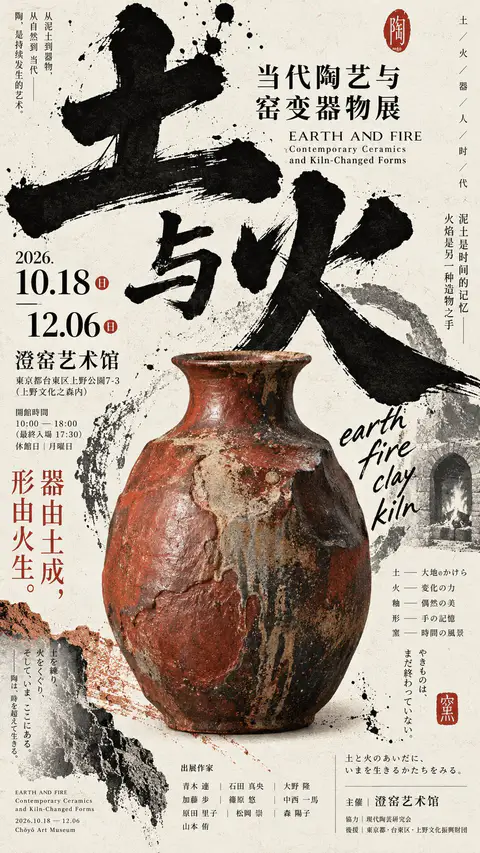
Draw inspiration from Japanese cultural exhibition posters, experimental typography, independent publishing, and contemporary editorial graphic design. Make typography the main visual structure, using oversized letterforms, expressive Kanji, bold cropping, unconventional spacing, and a sophisticated mix of Chinese, Japanese, and English.

Explore dynamic relationships between text and imagery through overlapping, masking, fragmented layouts, negative space, and layered compositions. Depending on the theme, use calligraphic collage, large characters framing illustrations, typography interacting with natural objects, or dense editorial arrangements.

Composition & Information Hierarchy

Build a visually striking yet carefully organized composition. Combine dominant headlines with smaller vertical text columns, exhibition details, dates, poetic phrases, fine rules, and compact information blocks.

Maintain the rich visual density of authentic Japanese art posters. Every element should contribute to the concept, with clear hierarchy, intentional asymmetry, balanced negative space, and strong readability even at thumbnail size.

Imagery & Print Texture

Integrate illustrations, photography, archival fragments, or physical materials naturally into the typography. Objects should interact with letters through meaningful overlap and spatial relationships rather than appearing as separate decorations.

Use subtle paper fibers, offset printing textures, ink grain, restrained registration imperfections, and tactile printed surfaces. Keep colors rich and controlled, with authentic material details and refined editorial craftsmanship.

Final Art Direction

The result should feel like an original poster commissioned by a Japanese art museum, independent publisher, cultural gallery, or design exhibition. Each composition should have its own distinctive visual concept while maintaining a cohesive Japanese editorial aesthetic.
【Landscape】[LANDSCAPE]
【Line Structure】[LAYERED / FLOWING / RADIATING / DIRECTIONAL]
【Palette】[COLORS]
【Scale Anchor】[TINY FIGURE / FLAG / BOAT / TENT]
【Aspect Ratio】9:16

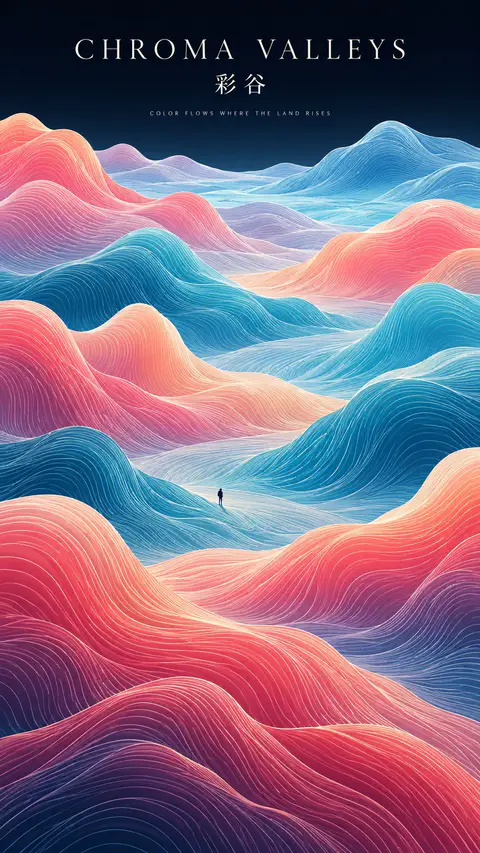
Create a refined vertical art poster that transforms the landscape into an abstract **contour-line world**.

Build the terrain primarily from long, smooth, continuous lines that follow its volume, direction, elevation, and movement.

The lines should become the landscape itself, not simply decorate its surface.

Use one clear structural system and strong line-density variation, with dense lines around major forms and more breathing room in calmer areas.

Use 2–5 related colors and let the colors flow naturally along the contour structure.

Keep the landscape monumental and use only one tiny scale anchor.

Add minimal editorial typography:

[TITLE]
[SUBTITLE]
[SHORT POETIC LINE]

High-end exhibition-poster aesthetic, abstract Eastern landscape feeling, strong thumbnail readability, large graphic forms, controlled negative space, and highly visible contour-line structure.
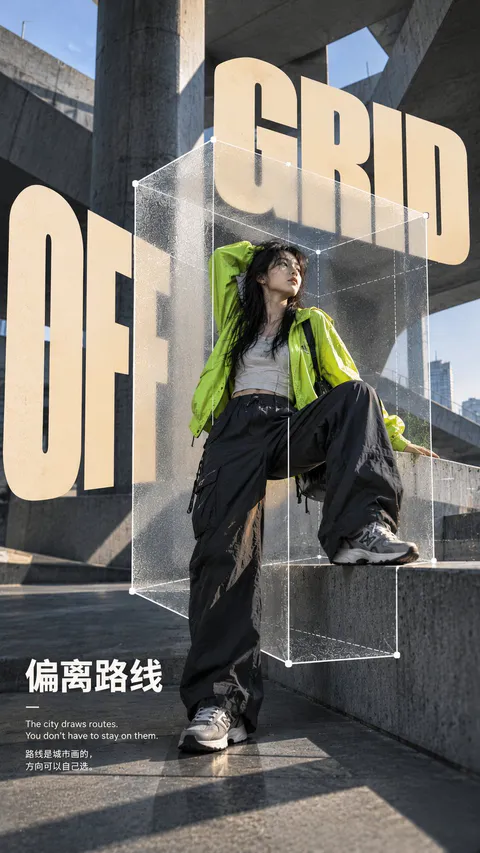
Create a 9:16 experimental fashion editorial poster with a realistic young adult subject in a bold asymmetric pose, wearing one strong accent color inside a modern architectural space.

Place the subject fully inside a clear 3D perspective volume with thin white edges, real front and back depth, natural body occlusion, and one or two subtle frosted translucent planes.

Use one spatial effect: full capture volume, real projected shadows, tilted volume, or a split frosted boundary.

Add one oversized English title that interacts with the person, architecture, and volume through cropping and real depth.

Keep only one medium Chinese title and one short concept sentence.

No logos, top-left branding blocks, fake magazine labels, coordinates, issue numbers, random microcopy, or decorative filler.

Keep the photography realistic, the pose loose and rebellious, the architecture geometric, and the palette controlled.

The result should feel like a real fashion editorial where the person, typography, and 3D spatial structure all exist in the same physical scene.
【Title】[TITLE]
【Subtitle】[SUBTITLE]
【Landscape】[canyon / river / cloud mountains / glacier / desert / coast]
【Main Palette】[PRIMARY COLORS]
【Scale Anchor】[tiny traveler / canoe / boat / small building]
【Visual Destination】[moon / distant light / horizon / mountain pass]
【Aspect Ratio】9:16

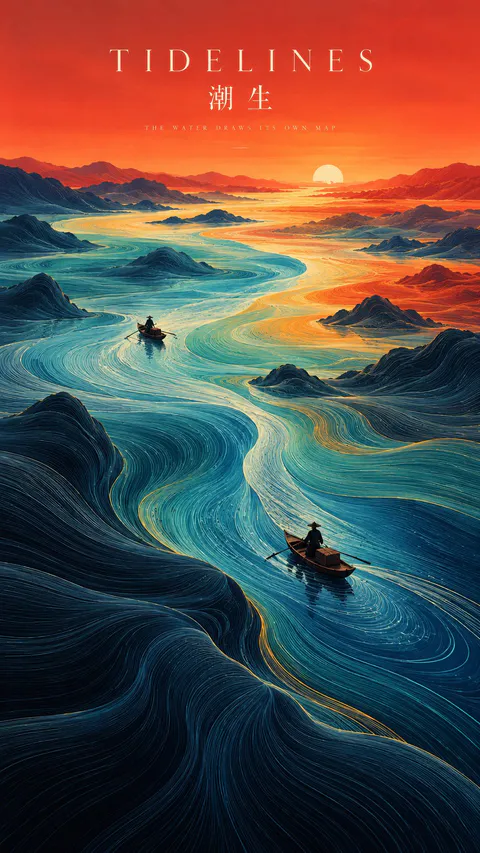
Create a refined vertical art poster that transforms a natural landscape into a flowing topographic world.

Build the terrain from hundreds of long, smooth, continuous contour lines that follow the shape, depth, and movement of the land. The lines should feel like a fusion of topographic maps, silk threads, and abstract Chinese landscape painting — directional, elegant, and highly organized rather than random decorative waves.

Use one strong visual path, such as a river, valley, ridge, cloud road, or negative-space corridor, to guide the eye from foreground to distance.

Keep the natural environment monumental and place only one or two extremely small human figures, boats, or architectural elements as scale anchors.

Use clear spatial hierarchy:
dense flowing lines in the main terrain,
calmer negative space around the visual path,
simpler and softer details in the distance.

Control the palette with 2–4 dominant colors rather than evenly distributed rainbow tones. Use large, clean color fields and let color changes reinforce depth and movement.

Add minimal editorial typography:
[TITLE]
[SUBTITLE]
[SHORT POETIC LINE]

Typography should feel like a contemporary exhibition poster or art-book cover — elegant, widely spaced, restrained, and secondary to the landscape.

The final image should feel poetic, monumental, calm, and highly designed, combining Eastern landscape aesthetics, contour-line abstraction, negative space, and modern editorial composition.
【POSTER TITLE】{e.g. RIVER OF LIGHT}
【SUBTITLE】{short poetic sentence}
【LANDSCAPE】{mountain valley / gorge / river / basin / cliffs}
【MOOD】{twilight / moonlit / quiet / monumental / mysterious}
【COLOR PALETTE】{deep blue, black, teal, warm ivory, burnt orange}
【SMALL TEXT】{series name / field study / archive / year}

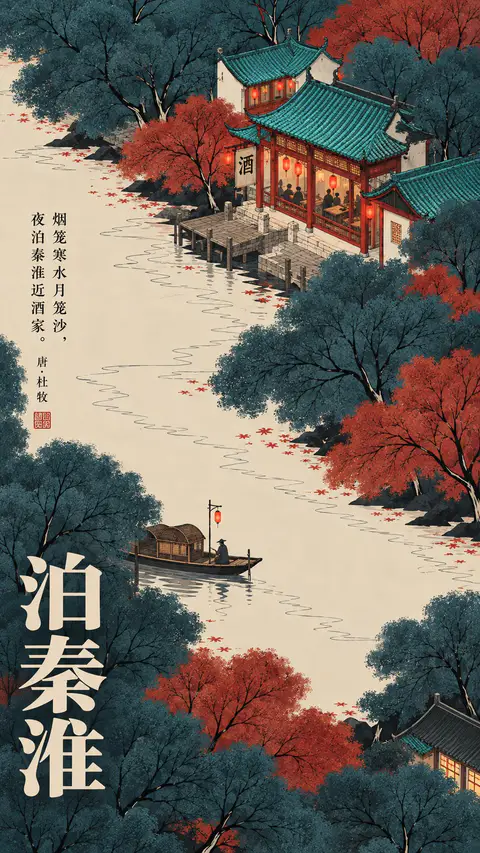
Create a 9:16 vertical English landscape poster built primarily through flowing contour linework and bold color.

Design the landscape first with strong, simple, readable landforms: monumental mountains, cliffs, valleys, rivers, ridges, forests or open terrain. The composition must remain visually powerful even at thumbnail size.

Use long, continuous lines to describe the structure and volume of the landscape. Mountain lines should follow slopes, ridges and geological folds; rivers and paths should create natural visual movement; sky lines should be calmer, longer and more horizontal. The linework must feel directional and intentional rather than random hatching or decorative noise.

Use a bold but controlled palette. Combine deep ink black and dark blue landforms with glacier blue, muted teal and warm ivory linework. Add small areas of burnt orange or copper along selected ridges, terrain edges or vegetation to create strong contrast and visual energy.

Keep the main shapes dark and graphic, then use line density and color shifts to create depth. Avoid excessive micro-detail, distressed texture, messy cross-hatching, neon effects or generic fantasy lighting.

Integrate refined editorial typography directly into the composition. Use an elegant high-contrast serif for the main title, supported by smaller modern text. The typography should feel like an art publication or exhibition poster, not a travel advertisement.

Use only meaningful text related to the poster concept. Do not add random slogans, filler copy, fake coordinates, meaningless labels, logos, Chinese characters or watermarks.

The final result should feel like a complete collectible artwork — part topographic drawing, part printmaking, part contemporary editorial poster design.
 GPT Image 23