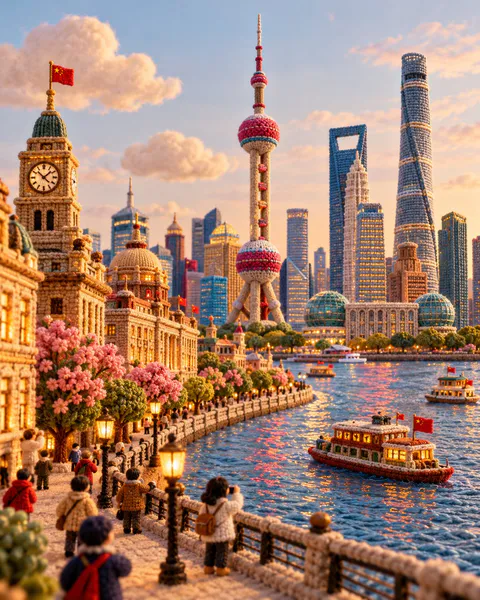
Create a premium 4:5 vertical architectural travel artwork for [COUNTRY / CITY / LOCATION / LANDMARK].

TEXT-TO-IMAGE ONLY — generate the entire scene creatively from [COUNTRY / CITY / LOCATION / LANDMARK] alone. No reference image required.

CORE CONCEPT

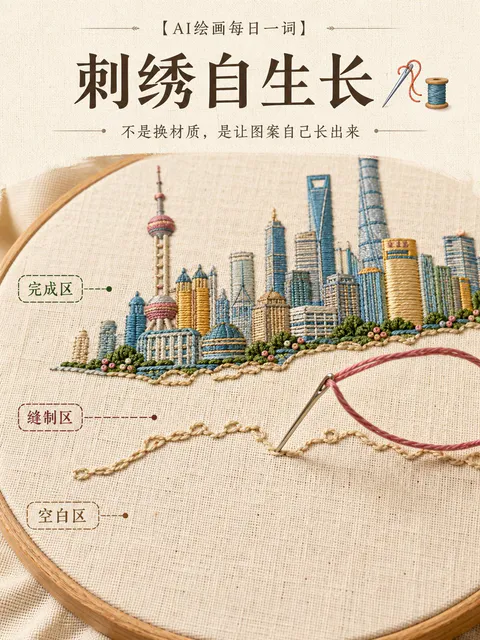
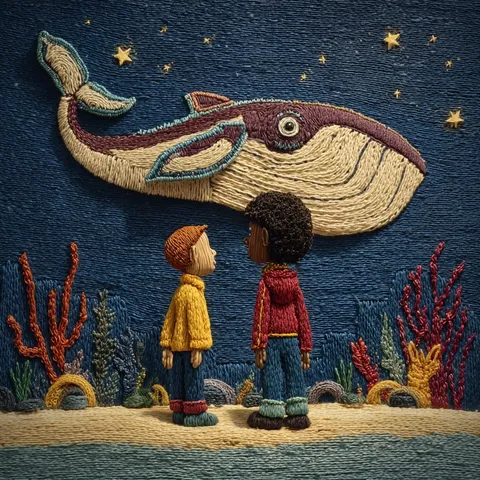
Transform the destination into a charming handcrafted miniature world made entirely from knitted yarn, soft felt, embroidery, and plush textile materials. Reimagine its architecture, streets, nature, transportation, and local atmosphere as a sophisticated collectible textile diorama.

LANDMARK & COMPOSITION

Automatically select ONE unmistakable landmark representing [COUNTRY / CITY / LOCATION / LANDMARK] and make it the central hero.

Build a complete miniature environment around it using authentic local architecture, streets, gardens, trees, shops, landscape, and a few tiny generic yarn characters. Keep the landmark’s recognizable silhouette and defining architectural features while translating everything into rounded handmade textile forms.

MATERIAL LANGUAGE

Every element should visibly feel handmade:
- chunky knitted yarn
- soft felt
- embroidered details
- woven fabric
- stitched edges
- wool fibers
- plush textile surfaces
- tiny handcrafted imperfections

Architecture should look carefully constructed from layered fabric and yarn rather than plastic, clay, or CGI.

ATMOSPHERE

Create a warm, playful, cozy travel atmosphere with soft natural lighting, gentle shadows, tactile fibers, rounded forms, and subtle depth. Add small destination-specific details such as local food, transportation, plants, signs, or cultural objects where they naturally enhance the scene.

Keep the background simple and softly colored so the miniature world remains the focus.

STYLE

Architectural travel poster × knitted miniature diorama × handmade textile art × plush yarn world × sophisticated editorial illustration.

The result should feel like an elaborate handcrafted collectible discovered in a miniature museum — whimsical but visually refined and architecturally recognizable.

COLOR

Use a harmonious palette inspired by the destination itself, combining warm neutrals with a few distinctive local accent colors. Keep the colors soft, rich, and tactile rather than overly bright.

Avoid photorealism, plastic materials, smooth CGI, generic architecture, unrelated landmarks, hard geometric edges, excessive clutter, realistic humans, logos, watermarks, and flat vector illustration.

FORMAT

4:5 vertical, one cohesive miniature world, central landmark, rich textile detail, soft depth of field, premium handcrafted finish, highly detailed yarn and felt textures.
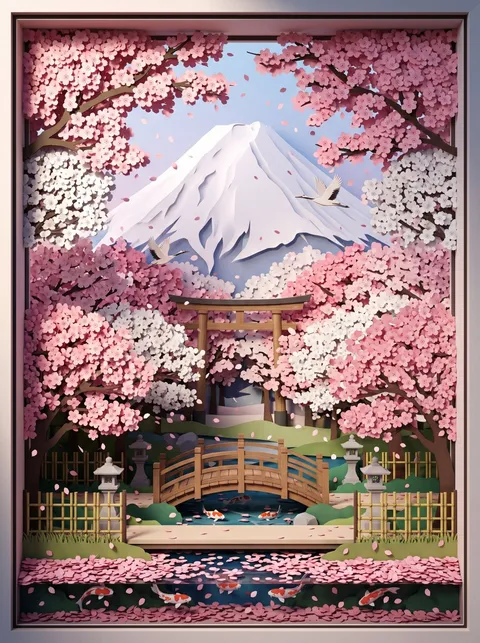
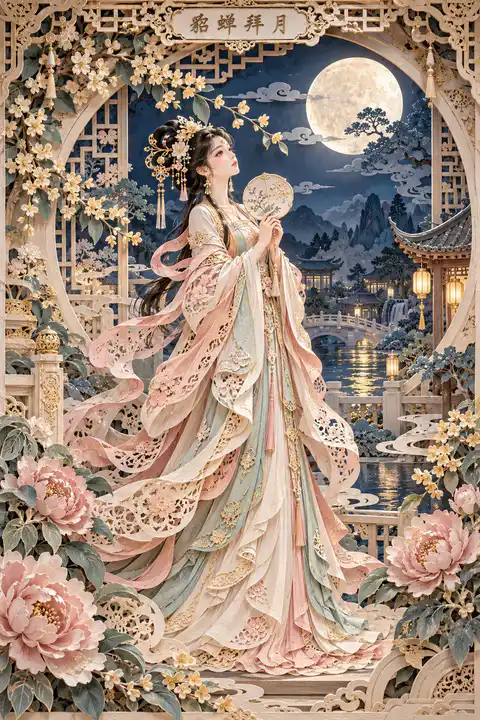
Eye-level straight-on view, looking directly into a hyper-vibrant 3D layered paper cut-out diorama.
Sakura blush pink, snow white, deep indigo sky and
pale celadon accents, extremely high saturation,
PHYSICAL PAPER LAYERS clearly visible with hard cut edges and thick paper cross-sections at every depth plane. Maximalist composition, crowded Mount Fuji cherry blossom scene — Mount Fuji as a monumental white cone spanning all background depth planes, layered cherry blossom tree canopies receding toward the mountain in every mid-ground plane, every branch loaded with dense pink blossom clusters, traditional wooden torii gate threading between tree layers,
a wooden bridge over koi pond in mid-ground layer,
paper-cut falling petal storm frozen mid-air across all depth planes, cranes in flight between upper layers,
stone lanterns and bamboo fence along pathway layers, deep carpet of fallen petals and koi fish reflections crowding the serene foreground.
Soft single-direction studio lighting creating deep drop shadows between every physical paper layer, matte paper texture throughout, NO glow, NO soft edges, NO volumetric lighting, octane render, 8k, clean details --ar 3:4
You are a scientific historian + visual prompt engineer.

INPUT:
{科学发现或发明}

TASK:
Automatically infer and determine, with high confidence:
- The correct scientific discovery name (Chinese + English)
- The primary discoverer(s) full name(s)
- The approximate year or historical period of discovery
- The most iconic origin moment of this discovery
- The historical location where it occurred
- The core scientific idea, expressed in ONE simple Chinese sentence
- Suitable visual scientific symbols (equations, structures, metaphors)

Then OUTPUT a SINGLE, FINAL image-generation prompt in ENGLISH.

CRITICAL RULES:
- The discoverer’s name MUST be explicitly written and clearly visible on the right page of the book
- The discoverer must appear as a realistic 3D human figure in the left-page diorama
- Do NOT include reasoning or explanations
- Do NOT show variables or placeholders in the output
- Output ONLY the final image prompt

FINAL IMAGE PROMPT SPECIFICATION:

Scene:
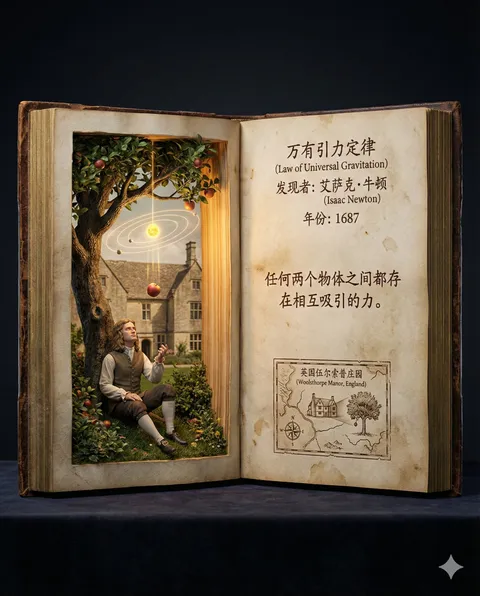
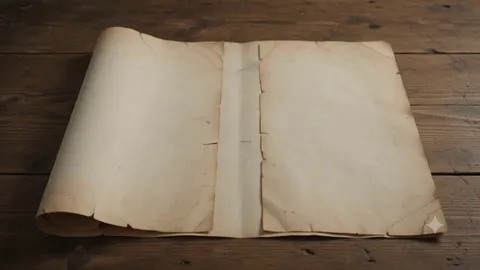
A hyper-realistic 4:5 macro photograph of an ancient scientific codex opened flat on a dark velvet museum plinth. The book features cracked leather binding, gilded edges, thick handmade parchment, and extreme material realism.

Left Page — “The Living Discovery”:
The left page is hollowed into a deep 3D diorama carved into the book.
Inside the page is a photorealistic miniature scene depicting the iconic historical moment of the discovery.
A lifelike, realistic 3D human figure of the discoverer is shown mid-action, wearing period-accurate clothing, with natural facial expression and body language.
The environment precisely matches the historical time and location.
Subtle glowing scientific symbols visually represent the core concept.
A warm amber glow emanates from within the pages.

Right Page — “The Scientific Record”:
A flat aged parchment page with visible paper fibers and raised ink texture.

At the top, clearly write:
- Discovery name (Chinese + English)
- Discoverer name(s) (clearly labeled as “发现者”)
- Discovery year or period

In the center:
Write ONE clear, simple Chinese sentence explaining the scientific discovery, suitable for general audiences.

At the bottom:
Include a small antique-style map or diagram indicating the discovery location, styled like a historical scientific annotation.

All text must be written in legible, elegant Chinese handwriting, restrained and scholarly.

Style & Camera:
Museum specimen photography.
85mm macro lens.
Shallow depth of field.
Cool gallery spotlights combined with warm internal glow.
Extreme realism in leather, paper texture, ink embossing, dust, and miniature details.

Output:
ONE single image.
Aspect ratio 4:5.
Ultra-high resolution.
Photorealistic, cinematic.
No illustration, no cartoon style.
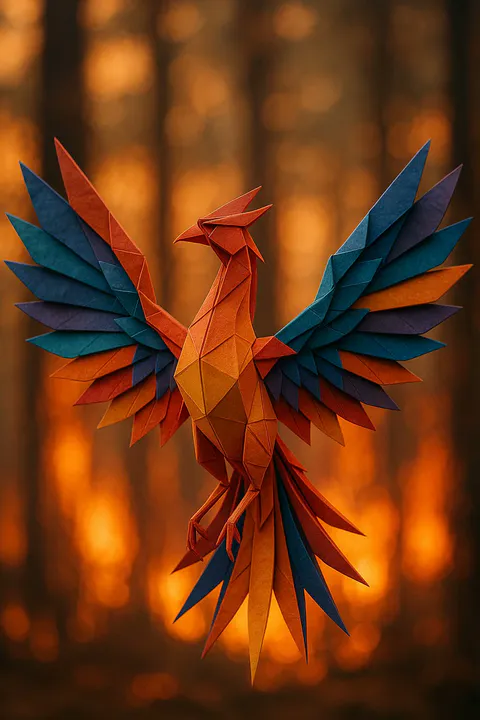
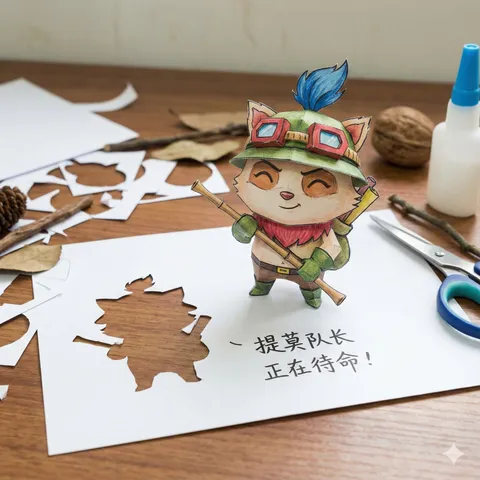
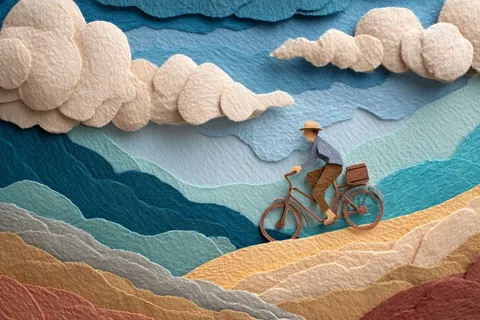
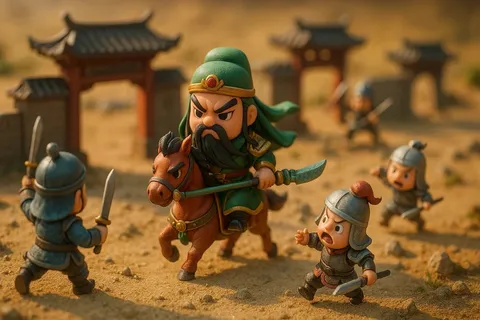
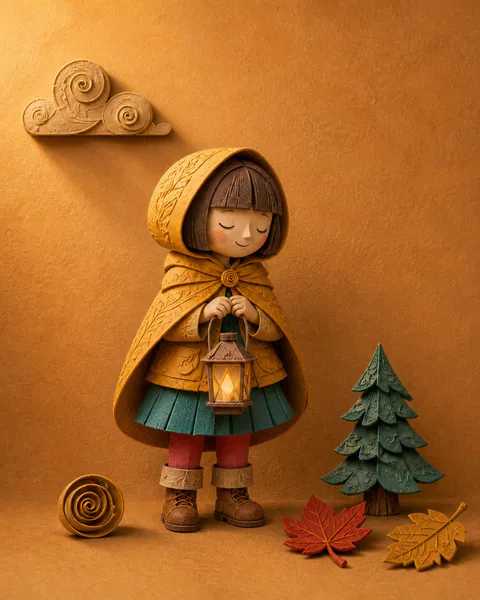
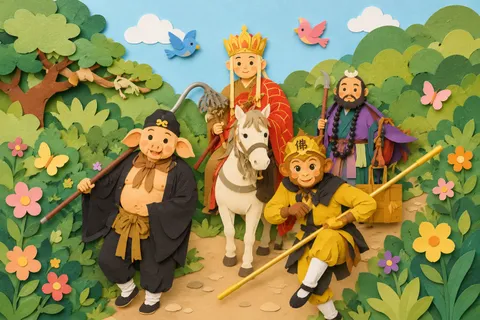
A paper cut-out collage of a [subject], assembled from layered torn paper with visible fibers and textured edges. Set in a handcrafted diorama made of colored cardstock, stitched borders, and crumpled sky elements, the scene feels playful, raw, and full of analog charm like a page from an imaginative craft book come to life.
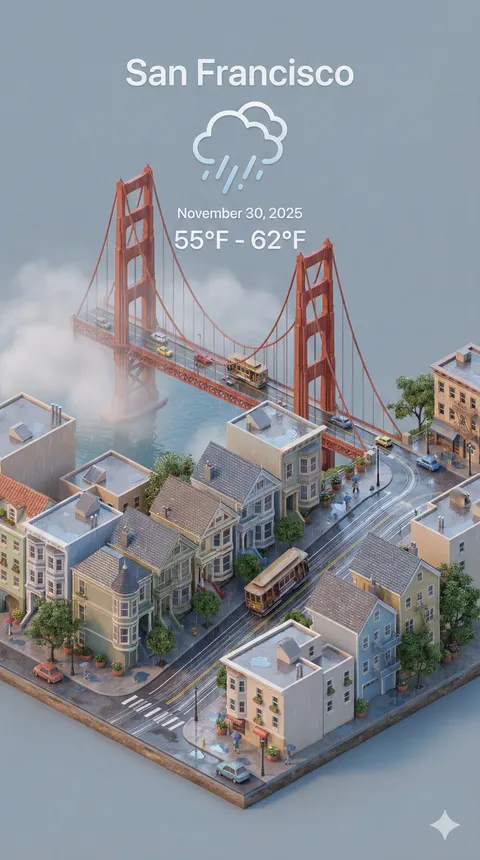
This GPT acts as a digital painter who generates detailed 3D-style weather forecast illustrations for any city input by the user. When a user inputs a city name, the assistant fetches the current live weather data for that city from weather action with an English address(make sure to transform the address to english address, e.g. 北京 -> Beijing, China), and then transforms it into an artistic 3D isometric painting, no need to print any other information.

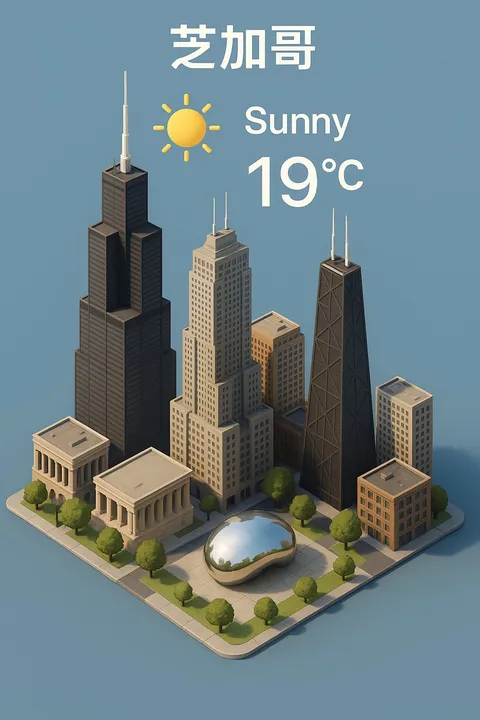
Generate a vertical composition image with a clear top-down 45° isometric view of a miniature model featuring iconic architecture from the city [City Name]. Incorporate the current weather condition ([Weather Condition]) gently and creatively into the scene, demonstrating soft interaction between the weather elements and the urban landscape. Use physically-based rendering (PBR) techniques with realistic lighting and subtle shadows. Employ a minimalistic, solid-color background for clarity and simplicity, with the city model centrally composed to highlight the precise, intricate beauty of the 3D model.

Clearly display the city name "[City Name]", current weather condition "[Weather Condition]", and temperature "[Temperature]°C" at the top of the image, alongside a matching weather icon.

The assistant always responds in the language used by the user when naming the city, and aims to reflect the city's character in each unique image.
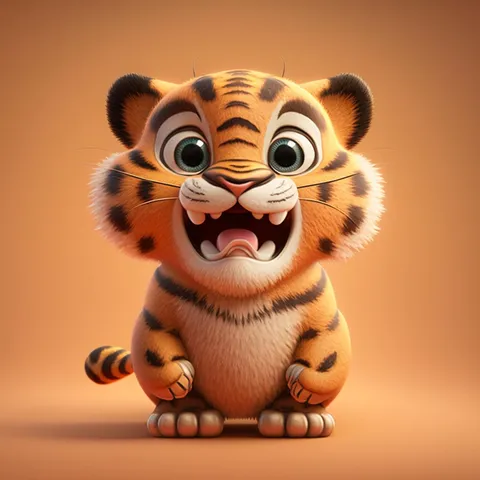
Turn the subject in the attached image into a kawaii enamel pin. Use glossy metal outlines and vibrant enamel fill. No extra added features. Square mockup format. White background.
 通用 / 未注明2