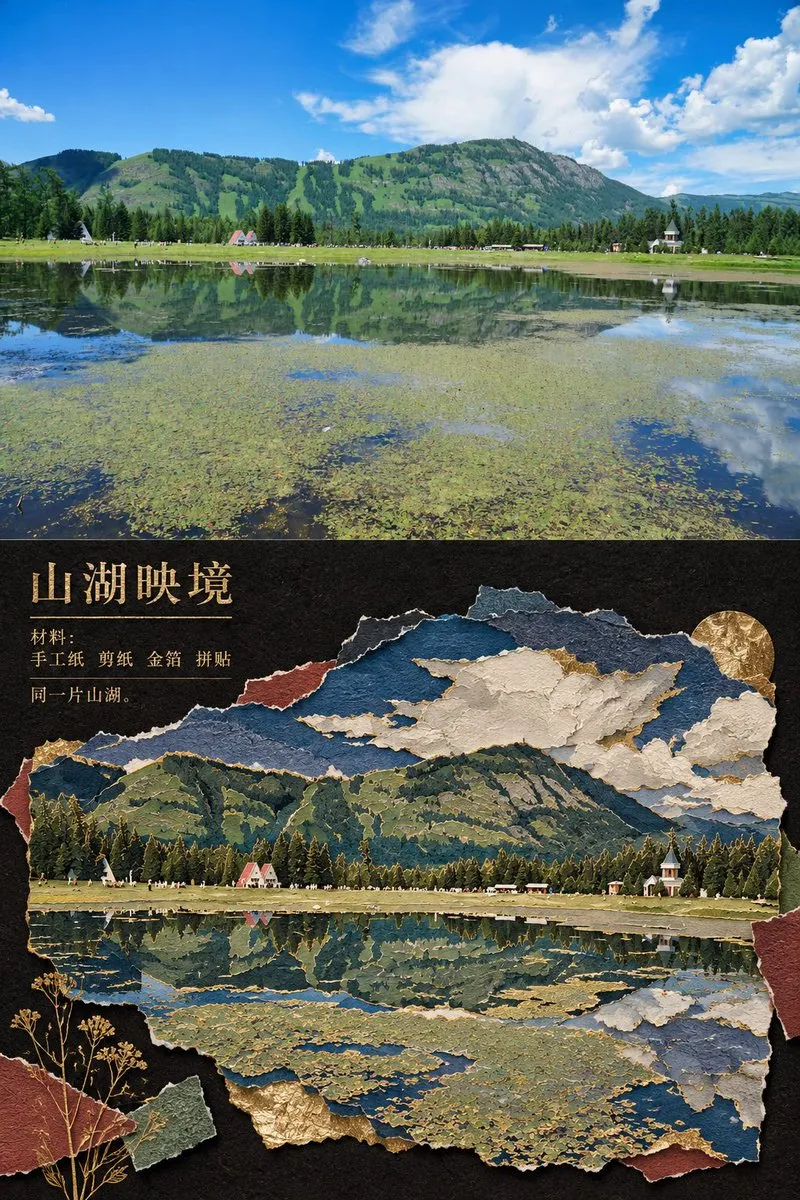
Primary request: Transform the input photo into a "Gilded Heritage Paper Cutout Collage Style" while preserving the photographic facts and identity of the subject.
Input images: The input photo is the sole content source; the upper half serves as the real photography area, and the lower half serves as the stylized reconstruction area of the same photo.
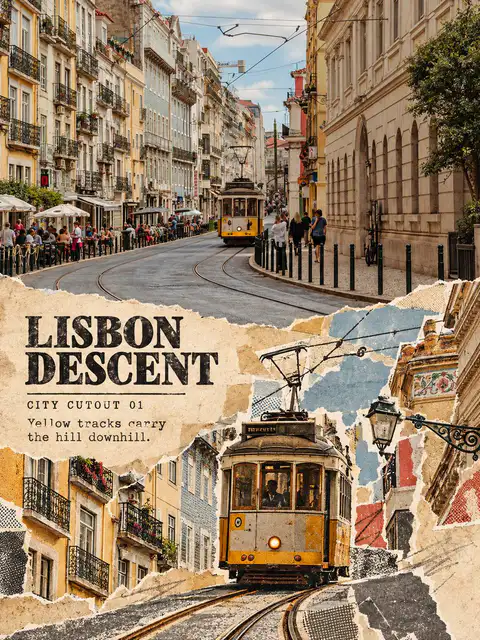
Scene/backdrop: The lower half uses a deep black or near-black coarse fiber paper base, creating irregular torn-paper windows, layered paper pieces, and negative space around the subject; distill real elements like sky, water, and greenery into desaturated indigo, charcoal, sage, and ochre paper cuts.
Subject: Maintain the subject's posture, count, silhouette, and spatial relationships; deconstruct the subject into multi-layered handmade paper cuts and low-relief cutouts with subtle hand-cut unevenness, incisions, and cast shadows.
Style/medium: Museum exhibit label aesthetic oriental paper carving, paper cut, collage, and gold foil stamped poster; subtle ancient gold line accents, embossed textures, and muted color blocks. Gold accents key silhouettes without overwhelming.
Composition/framing: Strict top-bottom split framing; clear horizontal boundary; lower half features extracted, scaled, and layered paper cutout windows with dark negative space and small museum-style text labels.
Lighting/mood: Black background absorbs ambient light, edges show restrained warm side lighting and soft shadows, dignified, serene, archival mood.
Color palette: Charcoal black, bone white base, indigo, sage green, ochre red, and subtle antique gold.
Materials/textures: Visible raw fibrous paper, torn edges, cut lines, layered thickness, embossed contours, uneven gold foil sheen, and fine paper flakes.
Text (verbatim): Generate concise factual title, material fields, and a short observation under eight words like gold-stamped museum labels.
Constraints: Preserve photographic realism on top; lower half must clearly derive from the photo but with distinct scale and material abstraction; no "Before/After" tags.
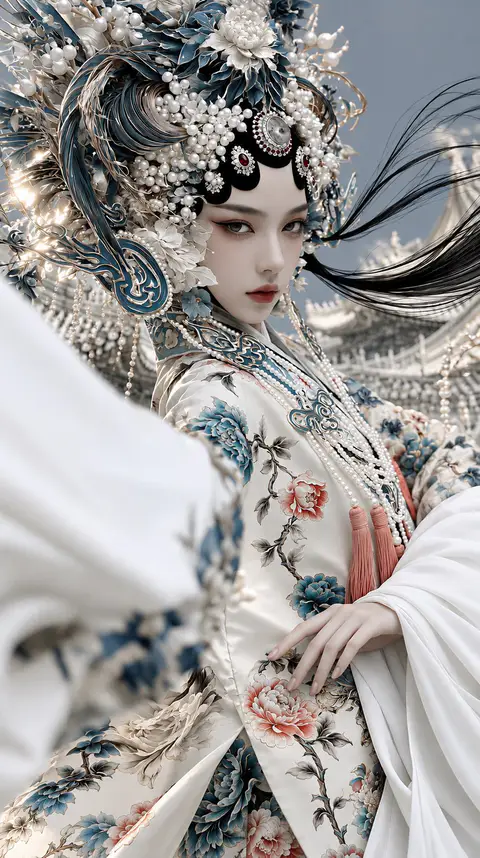
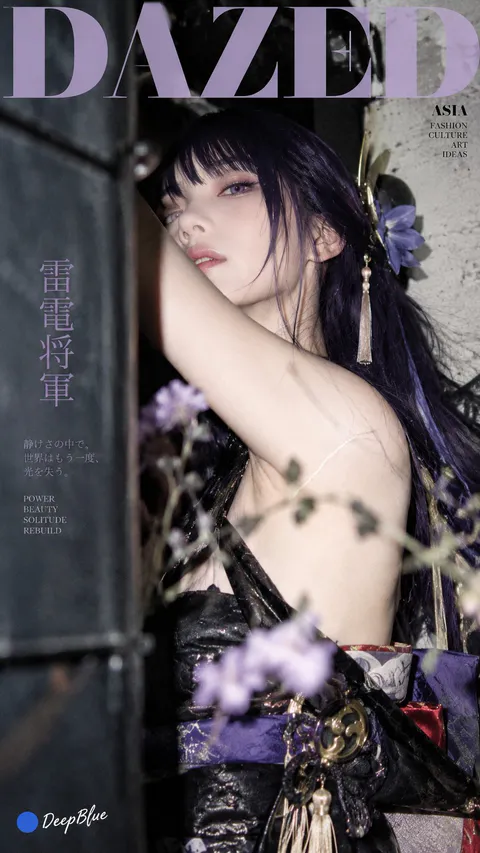
An extraordinarily beautiful young East Asian woman, ethereal Chinese imperial opera goddess, delicate porcelain face, refined facial anatomy, melancholic almond-shaped eyes, subtle smoky eyeliner, soft muted rose lips, cold and distant expression, elaborate monumental Chinese phoenix crown adorned with intricate blue enamel filigree, antique silver ornaments, countless luminous white pearls, sculpted ivory flowers, flowing metallic botanical structures, luxurious traditional Chinese ceremonial robes in ivory white silk, exquisite hand-embroidered peonies in dusty teal blue, muted coral pink and antique gold, cascading pearl necklaces, delicate coral tassels, graceful slender feminine hand resting naturally against embroidered silk, five anatomically accurate fingers, elegant finger proportions, realistic joints, natural perspective, flowing oversized white silk sleeves, long black hair blowing dramatically in the wind, ancient Chinese palace architecture softly blurred in the background, dramatic close-up fashion portrait, slightly low camera angle, sophisticated asymmetrical composition, shallow depth of field, foreground silk softly out of focus, Chinese mysticism meets European Rococo ornamentation, Old Master painting color harmony, cinematic chiaroscuro, cool blue-gray atmosphere, delicate warm highlights, realistic porcelain skin texture, intricate textile details, restrained HDR, photorealistic fine art fashion photography, 85mm portrait lens, f/1.8, extraordinary craftsmanship, museum-quality visual aesthetics, elegant and haunting beauty --ar 9:16 --v 8.2 --stylize 250 --chaos 8
【Title】[TITLE]
【Subtitle】[SUBTITLE]
【Landscape】[canyon / river / cloud mountains / glacier / desert / coast]
【Main Palette】[PRIMARY COLORS]
【Scale Anchor】[tiny traveler / canoe / boat / small building]
【Visual Destination】[moon / distant light / horizon / mountain pass]
【Aspect Ratio】9:16

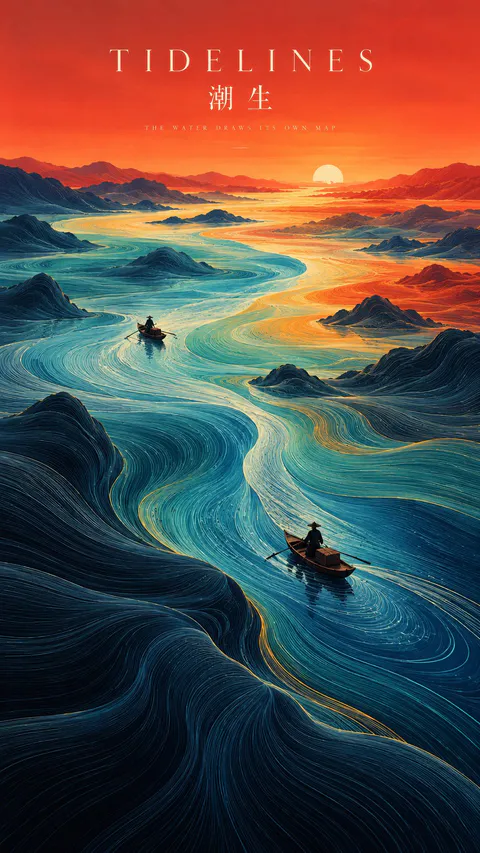
Create a refined vertical art poster that transforms a natural landscape into a flowing topographic world.

Build the terrain from hundreds of long, smooth, continuous contour lines that follow the shape, depth, and movement of the land. The lines should feel like a fusion of topographic maps, silk threads, and abstract Chinese landscape painting — directional, elegant, and highly organized rather than random decorative waves.

Use one strong visual path, such as a river, valley, ridge, cloud road, or negative-space corridor, to guide the eye from foreground to distance.

Keep the natural environment monumental and place only one or two extremely small human figures, boats, or architectural elements as scale anchors.

Use clear spatial hierarchy:
dense flowing lines in the main terrain,
calmer negative space around the visual path,
simpler and softer details in the distance.

Control the palette with 2–4 dominant colors rather than evenly distributed rainbow tones. Use large, clean color fields and let color changes reinforce depth and movement.

Add minimal editorial typography:
[TITLE]
[SUBTITLE]
[SHORT POETIC LINE]

Typography should feel like a contemporary exhibition poster or art-book cover — elegant, widely spaced, restrained, and secondary to the landscape.

The final image should feel poetic, monumental, calm, and highly designed, combining Eastern landscape aesthetics, contour-line abstraction, negative space, and modern editorial composition.
SOURCE & OUTPUT
Use each uploaded photo as the sole visual reference. Create one independent, high-end editorial poster per photo and output each separately. Never combine images or create a collage.

FORMAT & LAYOUT
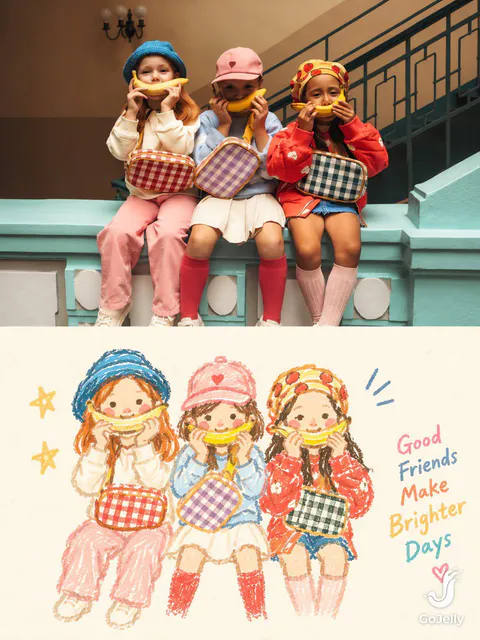
Use a strict vertical 3:4 composition divided into two exactly equal horizontal halves (50/50).

UPPER HALF — ORIGINAL PHOTOGRAPH
Preserve the original photograph faithfully, including the subject’s identity, facial features, structure, pose, proportions, natural texture, lighting, and color atmosphere. Apply only subtle premium editorial color grading for an art-magazine or exhibition-photography aesthetic. If necessary, extend only the surrounding background naturally to fit the frame. Never distort, replace, or redesign the subject.

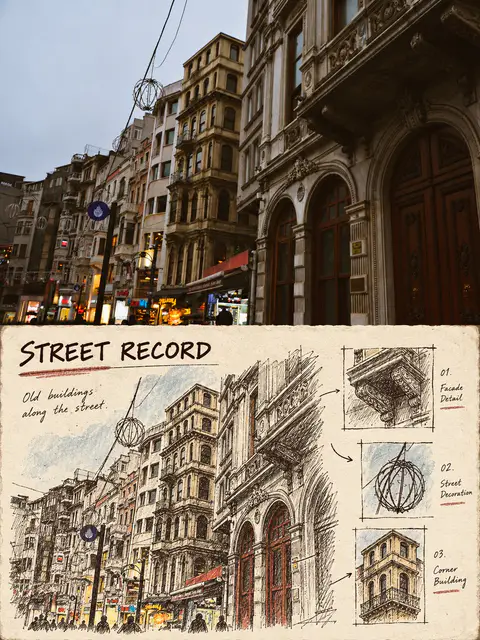
LOWER HALF — PASTEL CRAYON MEMORY
Reinterpret the photograph as a minimalist, retro paper-texture pastel crayon doodle. Identify the scene’s most memorable subject, pose, relationships, direction, emotional tone, and visual essence. Reconstruct only these defining elements rather than copying every object or illustrating the entire scene.

Use thick, loose, grainy, hand-drawn chalk-and-crayon outlines with dry pigment texture, subtle breaks, faded patches, imperfect edges, slight hand wobble, and naturally rounded stroke endings. Add only a few simple pastel color blocks, stripes, dots, or scribbles to suggest essential details. Avoid realistic volume, detailed rendering, and excessive shading.

COMPOSITION & NEGATIVE SPACE
Keep the illustration small and visually balanced within the lower half, surrounded by generous empty space. Position the subject naturally according to the original photograph, allowing asymmetry, off-center placement, suspended elements, or partial cropping where appropriate.

Include only a few tiny environmental clues or abstract doodles, drawn in the same rough, simplified crayon style. Keep them minimal, imperfect, and contour-based. Prioritize breathing room, scale contrast, visual rhythm, and intentional emptiness. Never overcrowd the composition.

BACKGROUND & COLOR PALETTE
Use a bright, near-white paper background: ivory, cream white, pale off-white, soft apricot white, or very light gray-white. Add only subtle paper fibers and fine grain. Keep the background clean, bright, and clearly lighter than the illustration. Avoid dirty gray, dark yellow, or aged brown paper.

Extract 2–4 defining colors from the original photograph and reinterpret them as fresh, soft pastel crayon tones, such as peach pink, apricot orange, cream yellow, mint green, sky blue, or pale lavender. Use sufficiently distinct coral, blue, blue-green, warm orange, or violet outlines for clear contrast. Maintain a gentle, playful, emotionally warm, and refined palette.

OPTIONAL TEXT
Add only a tiny handwritten note if it genuinely enhances the composition. Keep it sparse, legible, secondary, and unobtrusive. Never use decorative text as filler.

FINAL AESTHETIC
Create a sophisticated editorial poster combining authentic photography above with a reduced, recognizable, hand-drawn memory of the same scene below. The illustration should feel airy, naive without being childish, playful without looking cheap, and minimal without losing the photograph’s identity or emotional meaning. Emphasize expressive linework, selective color, paper texture, asymmetry, and negative space.
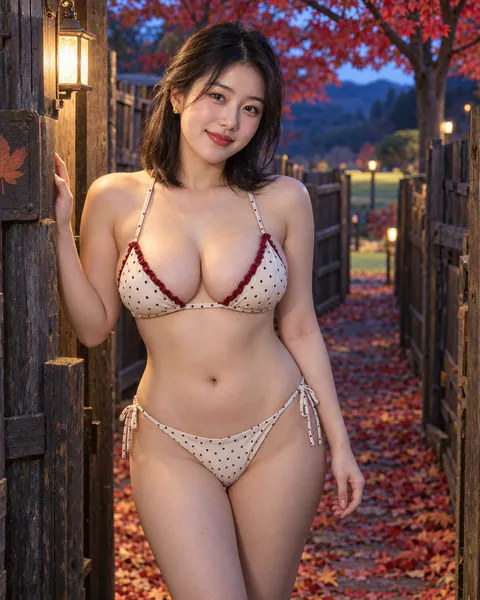
绝美23岁成年东亚美女,身材匀称丰满,胸部自然丰满,视觉约 F 杯,具有自然重量感与柔和圆润轮廓,纤细腰部与丰满胸部形成清晰而协调的胸腰对比,臀腿比例自然,气质时尚、自信、温柔。奶油底细小酒红波点三角罩杯比基尼,固定三角杯、细肩带与稳定下围,杯缘点缀柔和酒红色细窄花边,低腰双侧系带三角泳裤,两侧单层细带打成小结,光滑细腻弹力泳衣料搭配完整同色内衬,复古波点与简洁花边相互呼应。

干净柔光妆、轻浅玫瑰腮红与自然红唇;齐肩黑色短发向耳后轻拢,脸侧清爽;小巧金色圆耳钉。

她刚从枫园里的木栅迷宫走到出口,双脚稳稳停在落叶小径上,右手轻搭出口立柱、左手自然放在身侧,身体轻微转向镜头,嘴角先扬起一点笑意。人高的原木栅墙围出曲折路径,出口外是一株展开红色树冠的枫树与开阔草地,薄暮冷蓝天光和立柱上的暖白小灯共同照亮五官,像终于找到彼此后的短暂欢喜。

105mm人像摄影,轻微侧身、清晰正脸、头部至大腿构图,竖幅4:5,大光圈浅景深,原木立柱与红枫背景压缩成柔和色块,薄暮冷蓝环境光与出口暖白灯冷暖交织,真实皮肤纹理、自然血色与细腻面料细节,高级秋日度假写真,电影感,ultra realistic, masterpiece, best quality。
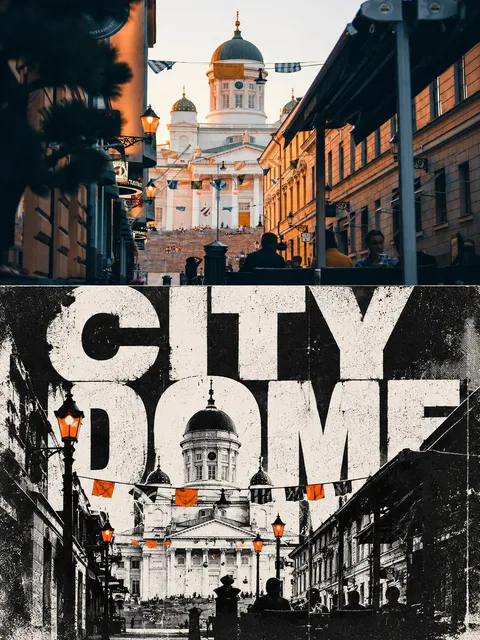
将输入的城市旅行照片制作成一张竖向3:4上下对比转绘海报,上半约50%保留真实照片中的城市建筑、街道、车辆、行人和地标透视;下半约50%转译为“MONOCHROME TYPE CITY|黑白巨字城市构成风”。下半用高反差黑白建筑剪影、炭黑暖白、粗半调复印颗粒、碳粉不均和旧纸磨损,提取照片中最准确的城市地标,并用巨大裁切英文标题“CITY / STREET”作为构图骨架,让字母与建筑穿插、出画、遮挡部分笔画。只保留最多一至两种来自照片的专色,不做渐变或全图染色;下半必须改变主体尺度与信息密度并保留连续低信息空场。中线水平清晰,不要普通双色滤镜、照片拼贴、无关地标、Logo、水印、假中文、乱码或原图/AI图角标。
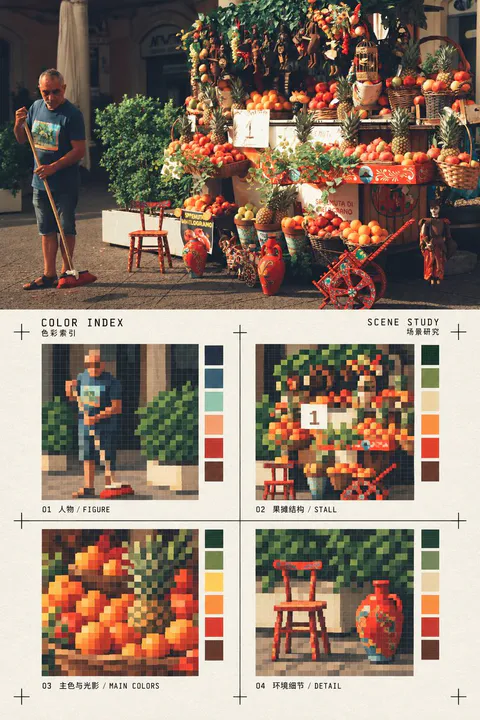
使用一张真实照片作为唯一内容来源,制作一张竖版上下对比编辑海报。上半部完整保留输入照片的真实摄影质感、主体身份、数量、姿态、空间关系、光线和构图,不把照片画成插画;下半部为同一照片的风格化转绘区:在暖白纸面上,把画面提炼成四个等大的方形像素色块索引,分别对应照片中最有辨识度的主体轮廓、建筑或物体结构、主色与光影关系、一个环境细节。每格使用有限色数的硬边像素块和低分辨率网格感,保留可追溯的形体,不做随机马赛克。四格排列为2×2,周围留出充足纸面;用细黑色十字裁切/定位标记框住索引区域,加入极少量小型双语标题与字段,例如“COLOR INDEX / SCENE STUDY”,文字克制、清晰、像印刷校样标注,不喧宾夺主。下半区必须像一张经过设计的色彩索引卡,而不是滤镜、普通像素化或重复照片;不增加无关物件,不改变照片主题。上下区域约各占一半,水平边界清楚;禁止左右并排、禁止多图拼贴、禁止“原图/AI图”角标、禁止水印和品牌标志。所有颜色从输入照片提取并压缩,四格内容随照片主体变化,适用于人物、动物、建筑、街景、自然、室内、食物和物件等任何照片。