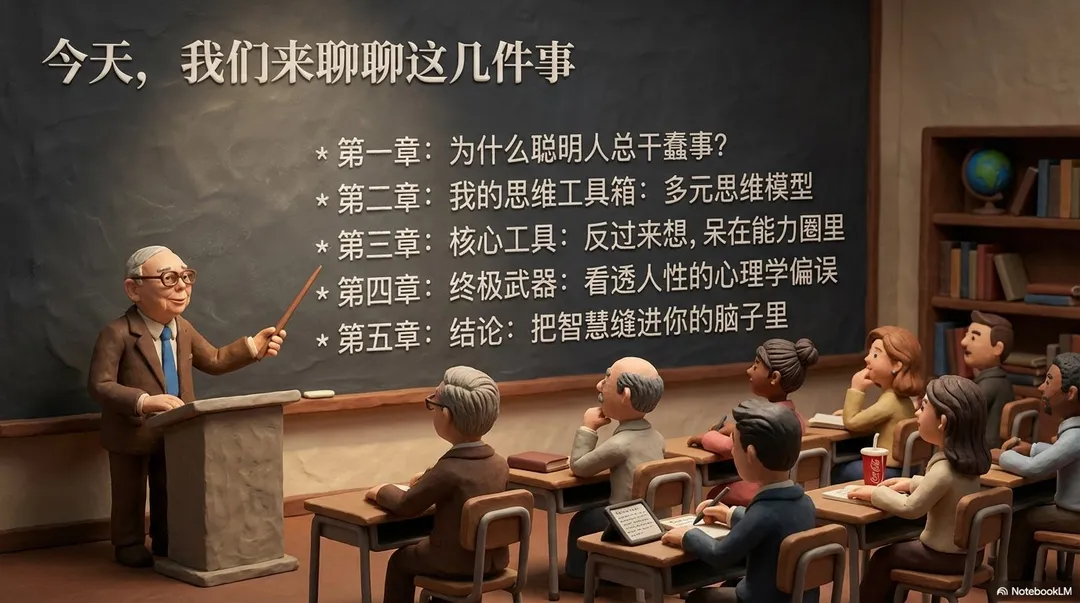
Please act as a Presentation Structure Designer and Stop-Motion Storyboard Director to help me organize the [Source Material] into a Chinese presentation themed around clay stop-motion animation. 1. Basic Parameters (Customizable): Topic: [Insert topic]; Source Material Type: [e.g., Paper/Book chapter/Lecture notes/Interview/Video subtitles]; Target Audience: [e.g., College students/Beginner investors/New professionals/Middle schoolers]; Tone: [e.g., Humorous/Rigorous/Casual like an old friend/Academic]; Estimated Slides: Around [10–15] slides. 2. Your Task: Read through the [Source Material] and extract 3–5 core chapters, each with 2–4 key takeaways or stories. Adapt them into a presentation with clear outline and progression. Visual setup: Entirely clay stop-motion scenes where characters, objects, and backgrounds are sculpted in clay with handmade textures and subtle imperfections; moderate color saturation, warm and engaging rather than realistic 3D. 3. Output Format Per Slide: Slide N format containing Title, Bullet points (3–5), Speaker Notes (80–150 words in first person), and Visual Design Prompt Description (Clay stop-motion style specifying setting, clay characters, key symbols, atmosphere, and clay animation aesthetic). 4. Structure: Title slide, Agenda, Chapters, Summary takeaway, Actionable conclusion/QA. 5. Output in Simplified Chinese. [Paste Source Material here].
Plantilla de prompts estructurada para crear presentaciones en stop motion de arcilla. Textura artesanal y tonos cálidos, ideal para diapositivas creativas.
Cómo usar este prompt
Copia el prompt original.
Pégalo en 通用 / 未注明.
Genera con la proporción —.
Posted on X by @rionaifantasy. PromptGallery only indexes it. Copyright stays with the author.
FAQ
¿Para qué modelo es este prompt?
El autor lo generó con 通用 / 未注明. La proporción recomendada es the original ratio. Otros modelos parecidos pueden usarlo, con resultados distintos.
¿Cómo se usa?
Copia el prompt original, cambia el tema como en “Plantilla de prompts para PPT en stop motion de arcilla” y pégalo en 通用 / 未注明.
¿De quién son la imagen y el prompt?
Son de Rion Wu (@rionaifantasy). Post original: https://x.com/rionaifantasy/status/2013147408629408098
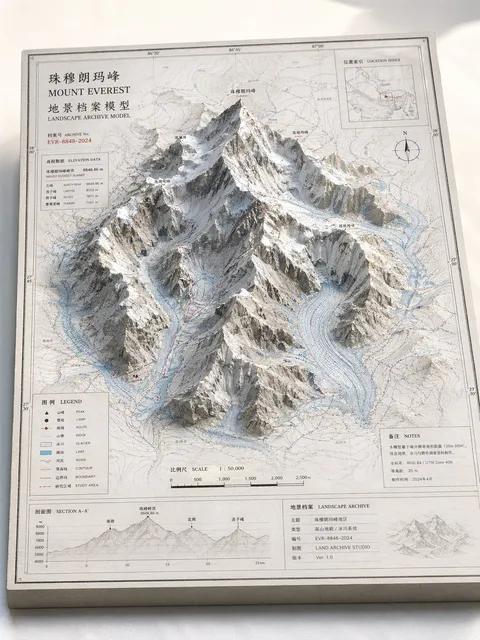
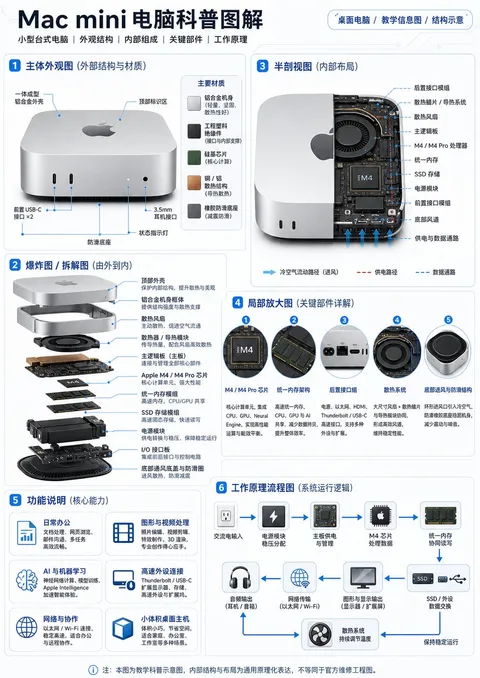
[Image X/N] [Chinese Module Name] — [Subject Name]

SCENE:
[3D visual perspective] of [subject English name],
photorealistic CGI scientific visualization,
[isometric / diagonal cutaway / aerial view / front-facing section / exploded view / dynamic vortex view / cosmic scale view],
designed as a premium natural science infographic poster.

TITLE SYSTEM:
- Main title (Chinese): "[中文主标题]"
- Subtitle (Chinese): "[认知颠覆副标题]"
- English label: "[UPPERCASE ENGLISH TITLE]"

VISUAL CONTENT:
- [Core visual element 1, 20-40 English words]
- [Core visual element 2, 20-40 English words]
- [Core visual element 3, 20-40 English words]
- [Core visual element 4, 20-40 English words]
- [Core visual element 5, optional, 20-40 English words]

ANNOTATION LABELS (Chinese):
[中文标注1], [中文标注2], [中文标注3], [中文标注4], [中文标注5], [中文标注6]

SPECIAL EFFECTS:
[Subject-specific visual effects, such as underwater caustics, volcanic glow, ice refraction, gravitational lensing, spiral airflow, sediment layers, electric discharge, mist, heat shimmer, magnetic field lines.]

LIGHTING:
[Lighting direction and mood, consistent with the whole series.]

SUMMARY (Chinese, bottom):
"[核心科学结论]"

FOOTER:
"— [系列名] · 第X页 / 共N页 —"

STYLE DNA:
photorealistic CGI render, museum-quality scientific illustration,
warm parchment beige background (#F0EDE6), matte linen surface texture,
DK encyclopedia aesthetic, natural history atlas style,
Chinese educational poster format, 3:4 portrait ratio,
annotation lines with small white dot anchor markers,
navy blue Chinese label text (#1A2E4A),
large Chinese Song-style bold main title at top,
wide-spaced uppercase English subtitle below,
small centered Chinese summary sentence at bottom,
subtle designed series footer only, no external watermark, no logo, no UI chrome,
deep ocean blue, geological brown, moss green, mineral gray natural palette,
ultra-detailed 8K textures, dramatic natural lighting,
consistent camera language, consistent lighting direction, same visual seed,
--ar 3:4 --v 6.1 --q 2 --s 80 --seed 24680
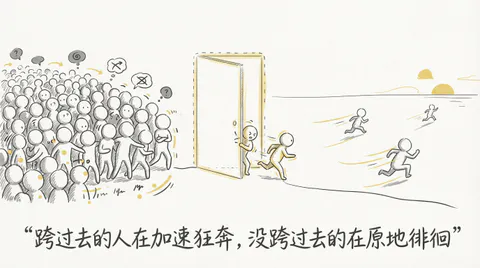
Minimal hand-drawn illustration, off-white paper background, dark gray sketch lines, muted umbrella yellow as the only accent color, lots of negative space, Notion-like doodle aesthetic, faceless round-headed human figure, clean editorial composition, conceptual rather than literal, simple background, no realism, no 3D, no painterly texture, no high saturation, no complex scene, no photographic detail. Add one short Chinese quote in a natural handwritten style near the bottom. The overall mood is restrained, lucid, slightly ironic, and emotionally calm. Keep the whole series visually consistent. Use Chinese wherever possible for any visible language or textual content, unless a proper noun, technical term, or special usage is better kept in its original form.
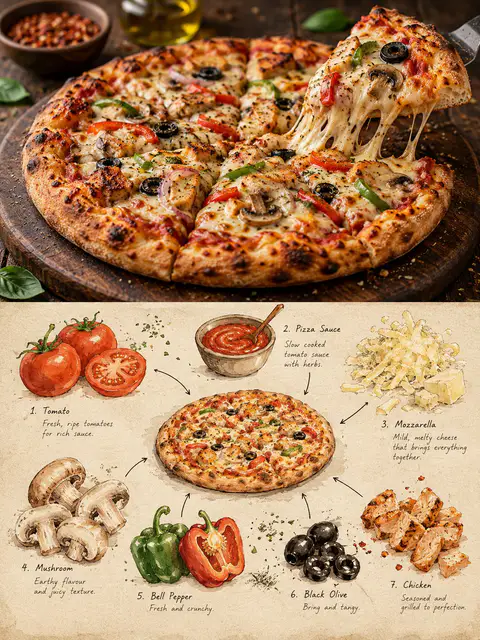
Create a premium 3:4 vertical editorial food-art poster for [COUNTRY / CITY / LOCAL DISH / FOOD SUBJECT].

TEXT-TO-IMAGE ONLY.
Generate the entire composition from the written dish or food subject alone. Do not request, upload, use, or depend on any reference image or existing photograph. Automatically identify the dish’s authentic appearance, ingredients, textures, and cultural identity.

CORE CONCEPT:
Create one elegant travel-food editorial poster combining realistic food photography in the upper section with a handmade ingredient-observation sketchbook in the lower section. Feature ONE recognizable plate or bowl containing a single dish, with at least three visually distinct ingredients.

UPPER SECTION — REALISTIC FOOD PHOTOGRAPHY:
Occupy approximately 48% of the canvas height. Create a beautifully composed, authentic photographic view of the specified local dish, preserving believable ingredient textures, natural lighting, realistic proportions, and culturally accurate presentation. Use subtle food-magazine color grading and extremely light film grain. Keep the entire plate or bowl visible.

SECTION DIVIDER:
Separate both sections with a straight, clean horizontal boundary. A very thin warm-ivory paper strip is optional. No gradients, blending, or elements crossing the divider.

LOWER SECTION — INGREDIENT OBSERVATION SHEET:
Use warm ivory drawing paper with visible fibers, fine grain, faint smudges, and subtle handmade irregularities. Create a sparse, asymmetrical food-field-note composition rather than repeating the full photographic dish.

Place ONE small, simplified but recognizable illustration of the complete dish near the center. Keep it secondary and compact, occupying approximately one-third of the lower section’s width.

Around it, illustrate 3–6 individually selected ingredients inferred from the dish. Use small watercolor specimens, cut-surface studies, herb sketches, grain clusters, sauce swatches, or distinctive ingredient shapes. Arrange them at varied sizes and angles with generous breathing room.

DRAWING STYLE:
Matte gouache, delicate black-ink outlines, slightly hesitant hand-drawn strokes, dry-brush gaps, uneven pigment coverage, soft watercolor edges, visible paper texture, and restrained natural colors. Keep ingredients recognizable without excessive detail. Add a few fine arrows and small handwritten numbers connecting specimens to the miniature dish.

TYPOGRAPHY:
Use minimal, understated editorial annotations only when helpful. Short ingredient names or tiny handwritten notes are acceptable. Keep all text small and secondary; avoid unnecessary titles or decorative lettering.

COLOR PALETTE:
Derive the colors naturally from the dish, balanced by warm cream, muted earth tones, and subtle ink details.

FINAL AESTHETIC:
Authentic local food photography × handmade ingredient studies × refined travel-food editorial × collectible culinary field notebook.

AVOID:
Multiple dishes, duplicate plates, mixed meals, inaccurate ingredients, excessive garnish, crowded layouts, gradients, bleeding transitions, glossy digital painting, flat vector infographics, 3D rendering, commercial menu styling, excessive text, logos, watermarks, and interface elements.

FORMAT:
3:4 vertical portrait, approximately 48% photographic food scene above and 52% illustrated ingredient-observation sheet below, crisp horizontal separation, generous negative space, premium publication quality, ultra-high definition.
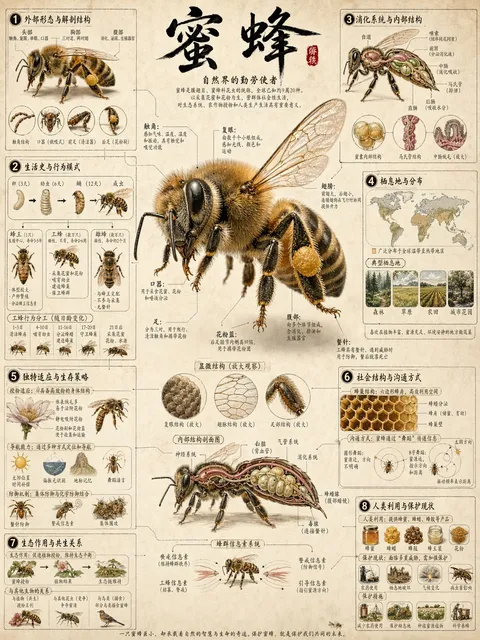
Role: World-class Scientific Encyclopedia Illustrator & Knowledge Graph Architect.

Task: Generate a highly detailed, extremely intricate, and visually stunning "Universal Illustrated Encyclopedia Science Infographic" in a classic, unbranded (NO logos) scientific encyclopedia style.

Subject Matter: Choose one from [People, Plants, or Animals].

Specific Subject: [e.g., The Giant Squid / Leonardo da Vinci / The Sequoia Tree].

Style: Fine, detailed scientific illustration on a retro, aged beige paper background. Delicate linework. Intricately complex and professional.

Key Visual Requirements:

1.  Lifelike 3D Effect (The Central Subject): The central subject in the "C position" must be rendered with extraordinary realism and dynamism. Create a dramatic sense of depth where the character, plant, or animal appears to break the frame, leaping or bursting out of the flat paper towards the viewer (an effect similar to anamorphic 3D or dynamic pop-out, with high-precision realism).

2.  Layout & Strategic White Space:
    * Central Subject: Dominates the center, with intentional "strategic white space" around it to enhance the popping-out effect and make the figure the clear focal point.
    * Surrounding Modules: The surrounding area (left, right, top, bottom, and corners) must be filled with 6-8 distinct, highly organized knowledge modules, depending on the subject. There should be a sense of organized density, not random clutter. The modules themselves must have clear borders, headers, and extensive, detailed content.

3.  Connections: Use a complex, logical network of fine leader lines, arrows, brackets, dotted lines, and small connection points to link the central figure to all surrounding modules, and interconnect the modules themselves into a cohesive knowledge web.

4.  Text & Annotation (Hard Requirement - Must be CLEAR Chinese):
    * Main Title: A large, prominent, beautifully executed **Chinese calligraphy** (书法体) of the specific subject's name [e.g., "大王乌贼"].
    * Calligraphic Accents: Scattered throughout the main content and module titles, use beautiful, clear Chinese calligraphy for important terms.
    * Standard Chinese Text: All other descriptive text, handwritten notes (大量清晰中文手写注释), module content, and annotations must be clear, legible Chinese characters (简体中文), not gibberish or unreadable symbols. Ensure text clarity is prioritized.
    * Leader Line Annotations: Every single small component, detail, submodule, diagram, or illustration within the modules must have detailed leader line annotations (拟解剖图) pointing directly to it for maximum professionalism and educational value. Every part should be labeled.

Subject-Specific Module Structure (Example for general reference):

A. For Humans [People]:
   - Module 1: Anatomy & Skeletal Structure (w/ magnified cross-sections)
   - Module 2: Physiological Processes (e.g., Circulatory/Nervous System)
   - Module 3: Historical Context & Timeline (Key Achievements)
   - Module 4: Major Contribution Diagram (Detailed breakdown)
   - Module 5: Cognitive Process / Psychological Insight
   - Module 6: Genetic Profile / Evolution
   - Module 7: Global Influence & Cultural Impact
   - Module 8: Cultural Representations / Legacy

B. For Animals:
   - Module 1: Full External Sketch & Anatomy (w/ microscope magnified detail circular windows)
   - Module 2: Behavioral Patterns & Lifecycle (e.g., Mating/Migration, Flowchart style)
   - Module 3: Digestive & Skeletal System
   - Module 4: Habitats & Distribution Map (with environmental details)
   - Module 5: Unique Adaptations (e.g., camouflage, hunting tools)
   - Module 6: Evolutionary History & Relatives
   - Module 7: Symbiotic Relationships / Ecosystem Role
   - Module 8: Conservation Status & Human Interaction

C. For Plants:
   - Module 1: Full Plant Sketch & Anatomy (w/ magnified leaf/root details)
   - Module 2: Photosynthesis & Lifecycle Flow (w/ icons for environment)
   - Module 3: Cellular Structure (Magnified circular views)
   - Module 4: Medicinal Properties / Practical Applications (as in original original prompt)
   - Module 5: Environmental Adaptations / Unique Features
   - Module 6: Distribution Map & Environmental Context
   - Module 7: Genetic Variations & Cultivation
   - Module 8: Historical Usage & Folklore

Overall Composition: Extremely dense with information, organized into 6-8 structured modules, but balanced with strategic empty space around the center to allow the main, hyper-realistic figure to pop. Hard-core, professional, academic, but visually engaging due to the dynamic 3D central figure. No branding from any specific encyclopedia (e.g., no "DK" logos). All annotations must be legible. All handwritten notes must be clear. Main titles in Chinese calligraphy. Aspect Ratio: 3:4.

主题内容:蜜蜂
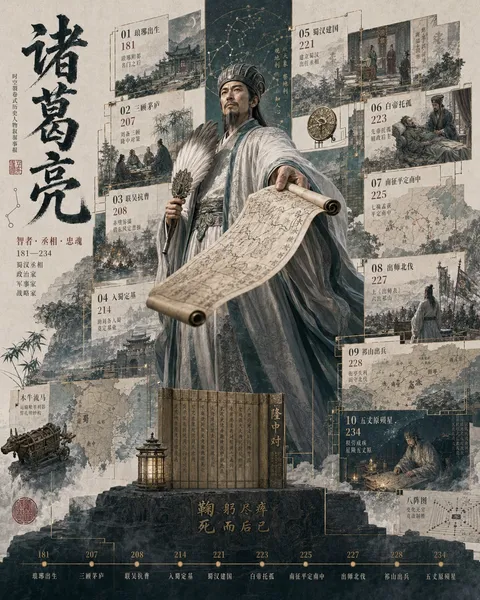
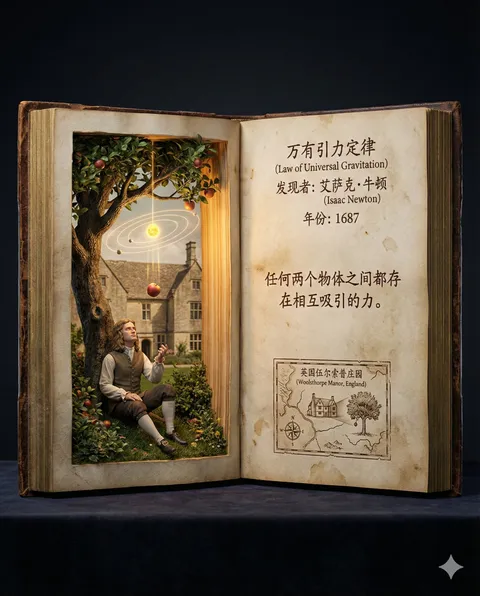
You are a scientific historian + visual prompt engineer.

INPUT:
{科学发现或发明}

TASK:
Automatically infer and determine, with high confidence:
- The correct scientific discovery name (Chinese + English)
- The primary discoverer(s) full name(s)
- The approximate year or historical period of discovery
- The most iconic origin moment of this discovery
- The historical location where it occurred
- The core scientific idea, expressed in ONE simple Chinese sentence
- Suitable visual scientific symbols (equations, structures, metaphors)

Then OUTPUT a SINGLE, FINAL image-generation prompt in ENGLISH.

CRITICAL RULES:
- The discoverer’s name MUST be explicitly written and clearly visible on the right page of the book
- The discoverer must appear as a realistic 3D human figure in the left-page diorama
- Do NOT include reasoning or explanations
- Do NOT show variables or placeholders in the output
- Output ONLY the final image prompt

FINAL IMAGE PROMPT SPECIFICATION:

Scene:
A hyper-realistic 4:5 macro photograph of an ancient scientific codex opened flat on a dark velvet museum plinth. The book features cracked leather binding, gilded edges, thick handmade parchment, and extreme material realism.

Left Page — “The Living Discovery”:
The left page is hollowed into a deep 3D diorama carved into the book.
Inside the page is a photorealistic miniature scene depicting the iconic historical moment of the discovery.
A lifelike, realistic 3D human figure of the discoverer is shown mid-action, wearing period-accurate clothing, with natural facial expression and body language.
The environment precisely matches the historical time and location.
Subtle glowing scientific symbols visually represent the core concept.
A warm amber glow emanates from within the pages.

Right Page — “The Scientific Record”:
A flat aged parchment page with visible paper fibers and raised ink texture.

At the top, clearly write:
- Discovery name (Chinese + English)
- Discoverer name(s) (clearly labeled as “发现者”)
- Discovery year or period

In the center:
Write ONE clear, simple Chinese sentence explaining the scientific discovery, suitable for general audiences.

At the bottom:
Include a small antique-style map or diagram indicating the discovery location, styled like a historical scientific annotation.

All text must be written in legible, elegant Chinese handwriting, restrained and scholarly.

Style & Camera:
Museum specimen photography.
85mm macro lens.
Shallow depth of field.
Cool gallery spotlights combined with warm internal glow.
Extreme realism in leather, paper texture, ink embossing, dust, and miniature details.

Output:
ONE single image.
Aspect ratio 4:5.
Ultra-high resolution.
Photorealistic, cinematic.
No illustration, no cartoon style.