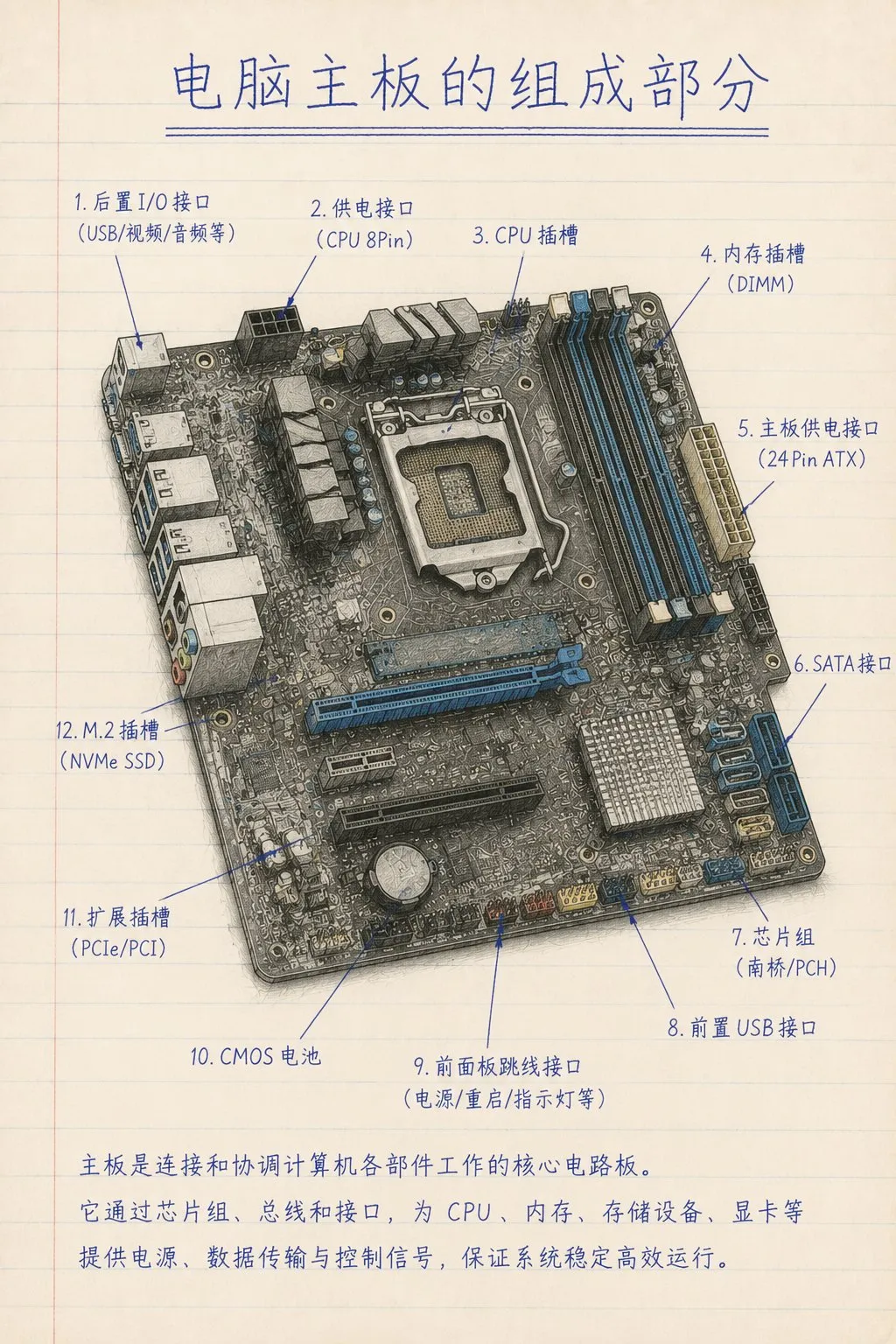
Create a vertical hand-drawn engineering popular science infographic themed "Components of [Subject]".

The background is a warm white, slightly yellowed lined notebook paper with light blue horizontal lines, featuring a faint red vertical margin on the left side, preserving delicate paper fiber and a subtle scanned texture.

At the top center of the page, write a large blue ballpoint pen handwritten title "[Chinese Title]", with slender, rounded, and neat lettering, underlined with a blue hand-drawn line beneath.

In the center, place a large [Device Name] at a slightly elevated three-quarter perspective angle, displayed in a partially opened, cutaway, or disassembled state to show internal structures. The structure aligns with real engineering logic, with distinct and recognizable component layers.

The main subject adopts a fine graphite pencil engineering sketch style: black and grey fine line outlines, dense hatching and cross-hatching creating volume, with realistic matte, reflective, and mechanical textures on metal surfaces. Dominated by grey-black tones, with restrained touches of colored pencil in yellow, red, and blue only for copper wires, circuits, coolants, or cables. Retain natural hand-drawn lines and slight imperfections.

Surrounding the subject, arrange [Number] numbered Chinese labels, all written in the same blue ballpoint handwritten style, pointing accurately to components with thin blue straight arrows. Labels must not obstruct the device, arrows must not cross, with balanced layout and clean negative space.

Labels:
1. [Component Name]
2. [Component Name]
...

At the bottom of the page, write 2 to 3 short lines of principle explanation in the same blue handwriting:
"[Explanation Text]"

The overall feel is like a meticulously drawn classroom study note by an engineering student: technically accurate, detail-rich, realistic yet handcrafted, neatly laid out, clear in information, and naturally scanned.
SOURCE & OUTPUT
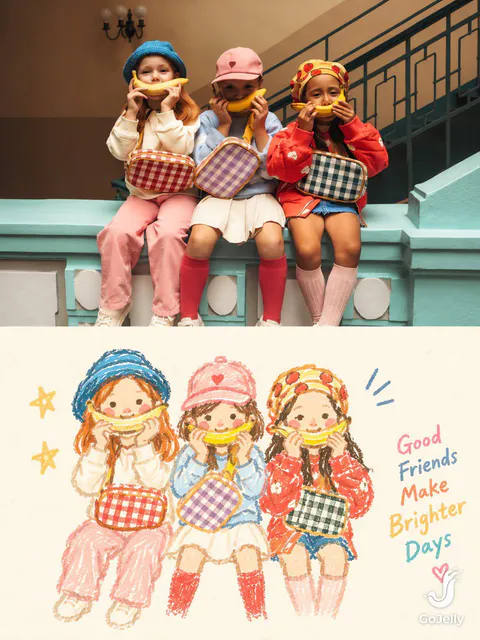
Use each uploaded photo as the sole visual reference. Create one independent, high-end editorial poster per photo and output each separately. Never combine images or create a collage.

FORMAT & LAYOUT
Use a strict vertical 3:4 composition divided into two exactly equal horizontal halves (50/50).

UPPER HALF — ORIGINAL PHOTOGRAPH
Preserve the original photograph faithfully, including the subject’s identity, facial features, structure, pose, proportions, natural texture, lighting, and color atmosphere. Apply only subtle premium editorial color grading for an art-magazine or exhibition-photography aesthetic. If necessary, extend only the surrounding background naturally to fit the frame. Never distort, replace, or redesign the subject.

LOWER HALF — PASTEL CRAYON MEMORY
Reinterpret the photograph as a minimalist, retro paper-texture pastel crayon doodle. Identify the scene’s most memorable subject, pose, relationships, direction, emotional tone, and visual essence. Reconstruct only these defining elements rather than copying every object or illustrating the entire scene.

Use thick, loose, grainy, hand-drawn chalk-and-crayon outlines with dry pigment texture, subtle breaks, faded patches, imperfect edges, slight hand wobble, and naturally rounded stroke endings. Add only a few simple pastel color blocks, stripes, dots, or scribbles to suggest essential details. Avoid realistic volume, detailed rendering, and excessive shading.

COMPOSITION & NEGATIVE SPACE
Keep the illustration small and visually balanced within the lower half, surrounded by generous empty space. Position the subject naturally according to the original photograph, allowing asymmetry, off-center placement, suspended elements, or partial cropping where appropriate.

Include only a few tiny environmental clues or abstract doodles, drawn in the same rough, simplified crayon style. Keep them minimal, imperfect, and contour-based. Prioritize breathing room, scale contrast, visual rhythm, and intentional emptiness. Never overcrowd the composition.

BACKGROUND & COLOR PALETTE
Use a bright, near-white paper background: ivory, cream white, pale off-white, soft apricot white, or very light gray-white. Add only subtle paper fibers and fine grain. Keep the background clean, bright, and clearly lighter than the illustration. Avoid dirty gray, dark yellow, or aged brown paper.

Extract 2–4 defining colors from the original photograph and reinterpret them as fresh, soft pastel crayon tones, such as peach pink, apricot orange, cream yellow, mint green, sky blue, or pale lavender. Use sufficiently distinct coral, blue, blue-green, warm orange, or violet outlines for clear contrast. Maintain a gentle, playful, emotionally warm, and refined palette.

OPTIONAL TEXT
Add only a tiny handwritten note if it genuinely enhances the composition. Keep it sparse, legible, secondary, and unobtrusive. Never use decorative text as filler.

FINAL AESTHETIC
Create a sophisticated editorial poster combining authentic photography above with a reduced, recognizable, hand-drawn memory of the same scene below. The illustration should feel airy, naive without being childish, playful without looking cheap, and minimal without losing the photograph’s identity or emotional meaning. Emphasize expressive linework, selective color, paper texture, asymmetry, and negative space.
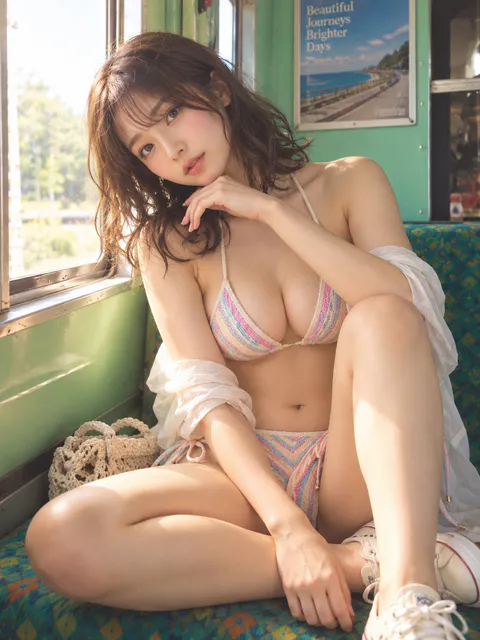
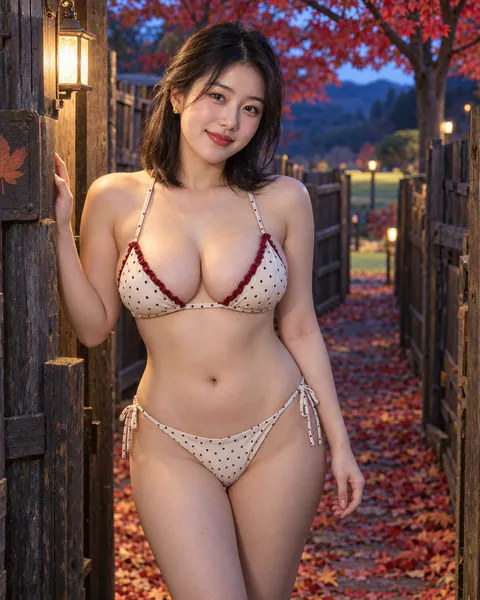
绝美23岁成年东亚美女,身材匀称丰满,胸部自然丰满,视觉约 F 杯,具有自然重量感与柔和圆润轮廓,纤细腰部与丰满胸部形成清晰而协调的胸腰对比,臀腿比例自然,气质时尚、自信、温柔。奶油底细小酒红波点三角罩杯比基尼,固定三角杯、细肩带与稳定下围,杯缘点缀柔和酒红色细窄花边,低腰双侧系带三角泳裤,两侧单层细带打成小结,光滑细腻弹力泳衣料搭配完整同色内衬,复古波点与简洁花边相互呼应。

干净柔光妆、轻浅玫瑰腮红与自然红唇;齐肩黑色短发向耳后轻拢,脸侧清爽;小巧金色圆耳钉。

她刚从枫园里的木栅迷宫走到出口,双脚稳稳停在落叶小径上,右手轻搭出口立柱、左手自然放在身侧,身体轻微转向镜头,嘴角先扬起一点笑意。人高的原木栅墙围出曲折路径,出口外是一株展开红色树冠的枫树与开阔草地,薄暮冷蓝天光和立柱上的暖白小灯共同照亮五官,像终于找到彼此后的短暂欢喜。

105mm人像摄影,轻微侧身、清晰正脸、头部至大腿构图,竖幅4:5,大光圈浅景深,原木立柱与红枫背景压缩成柔和色块,薄暮冷蓝环境光与出口暖白灯冷暖交织,真实皮肤纹理、自然血色与细腻面料细节,高级秋日度假写真,电影感,ultra realistic, masterpiece, best quality。
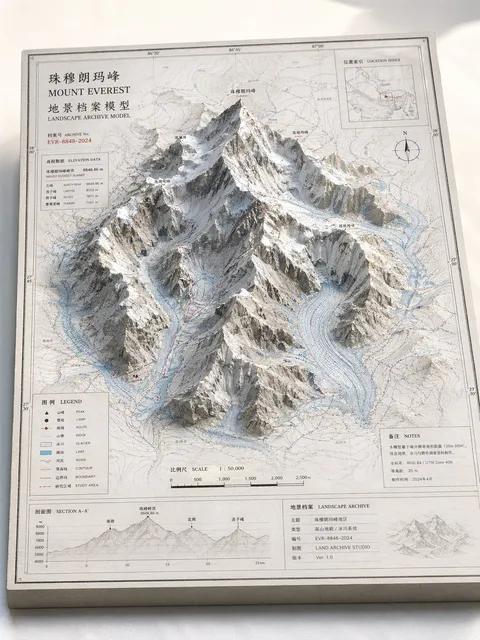
[Image X/N] [Chinese Module Name] — [Subject Name]

SCENE:
[3D visual perspective] of [subject English name],
photorealistic CGI scientific visualization,
[isometric / diagonal cutaway / aerial view / front-facing section / exploded view / dynamic vortex view / cosmic scale view],
designed as a premium natural science infographic poster.

TITLE SYSTEM:
- Main title (Chinese): "[中文主标题]"
- Subtitle (Chinese): "[认知颠覆副标题]"
- English label: "[UPPERCASE ENGLISH TITLE]"

VISUAL CONTENT:
- [Core visual element 1, 20-40 English words]
- [Core visual element 2, 20-40 English words]
- [Core visual element 3, 20-40 English words]
- [Core visual element 4, 20-40 English words]
- [Core visual element 5, optional, 20-40 English words]

ANNOTATION LABELS (Chinese):
[中文标注1], [中文标注2], [中文标注3], [中文标注4], [中文标注5], [中文标注6]

SPECIAL EFFECTS:
[Subject-specific visual effects, such as underwater caustics, volcanic glow, ice refraction, gravitational lensing, spiral airflow, sediment layers, electric discharge, mist, heat shimmer, magnetic field lines.]

LIGHTING:
[Lighting direction and mood, consistent with the whole series.]

SUMMARY (Chinese, bottom):
"[核心科学结论]"

FOOTER:
"— [系列名] · 第X页 / 共N页 —"

STYLE DNA:
photorealistic CGI render, museum-quality scientific illustration,
warm parchment beige background (#F0EDE6), matte linen surface texture,
DK encyclopedia aesthetic, natural history atlas style,
Chinese educational poster format, 3:4 portrait ratio,
annotation lines with small white dot anchor markers,
navy blue Chinese label text (#1A2E4A),
large Chinese Song-style bold main title at top,
wide-spaced uppercase English subtitle below,
small centered Chinese summary sentence at bottom,
subtle designed series footer only, no external watermark, no logo, no UI chrome,
deep ocean blue, geological brown, moss green, mineral gray natural palette,
ultra-detailed 8K textures, dramatic natural lighting,
consistent camera language, consistent lighting direction, same visual seed,
--ar 3:4 --v 6.1 --q 2 --s 80 --seed 24680