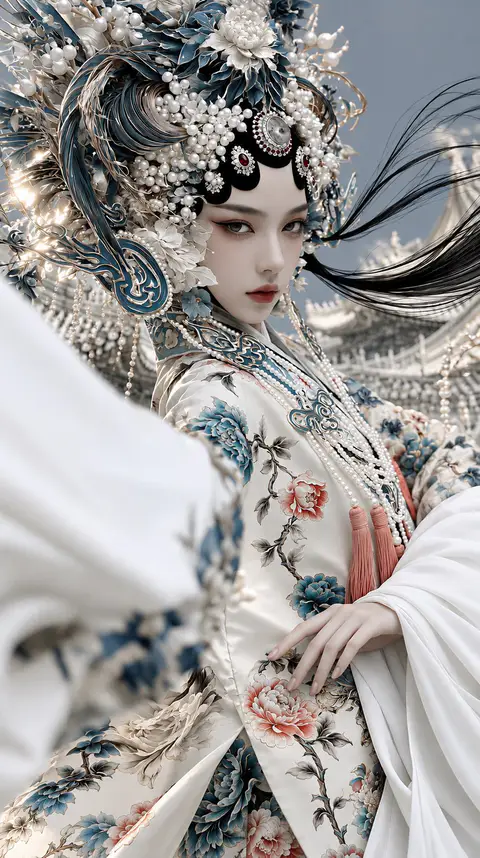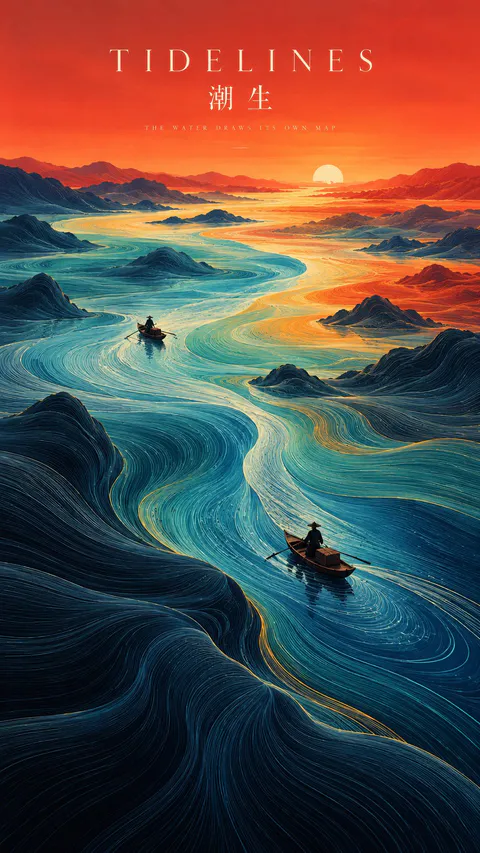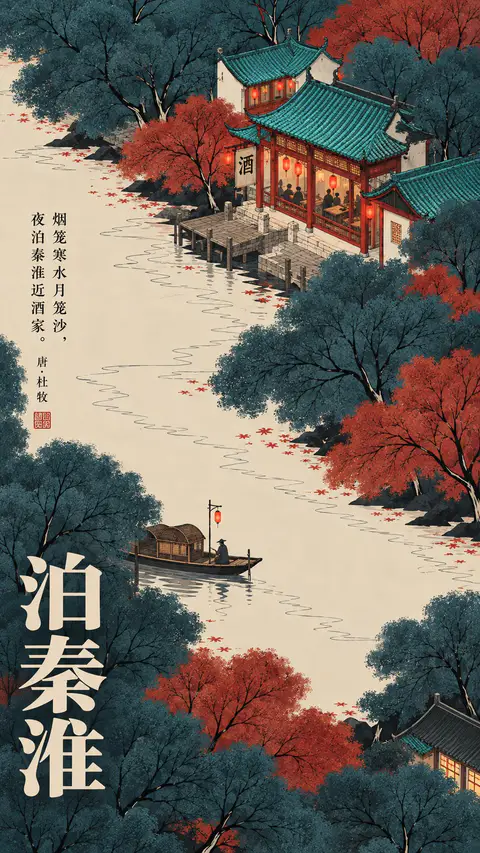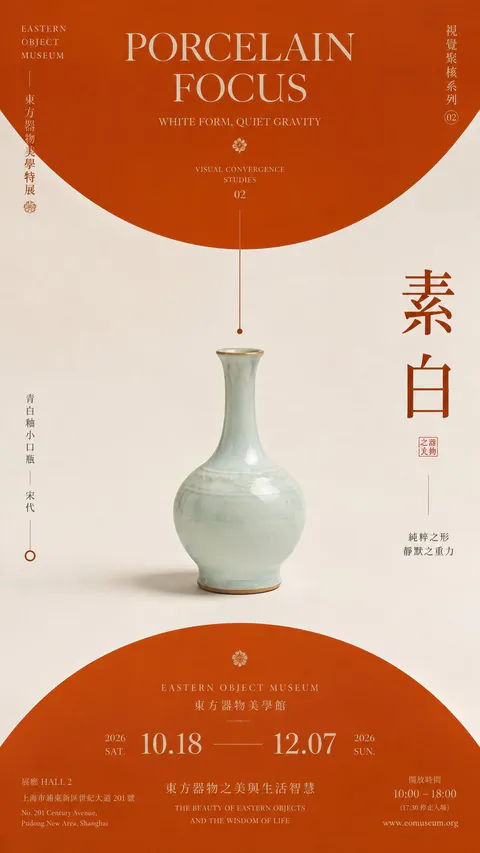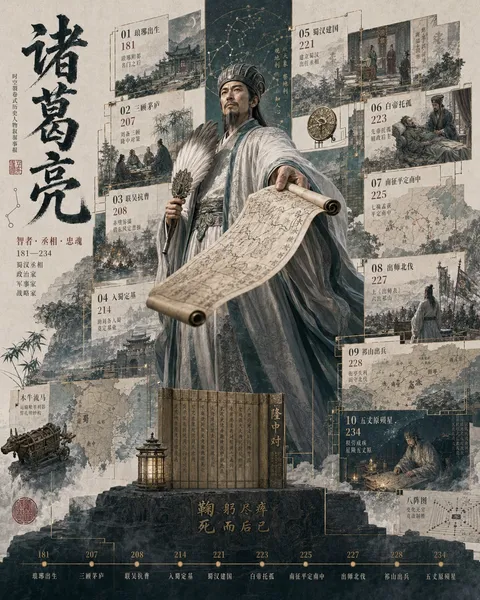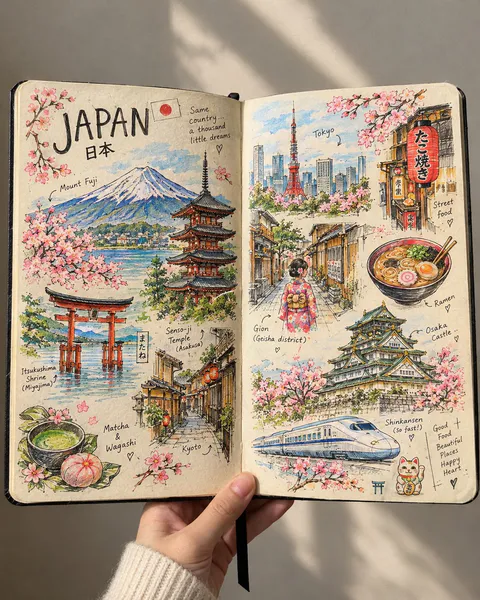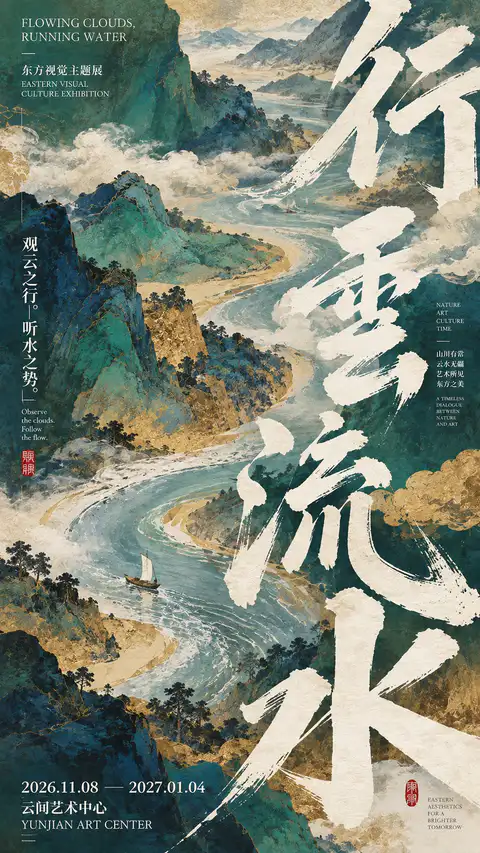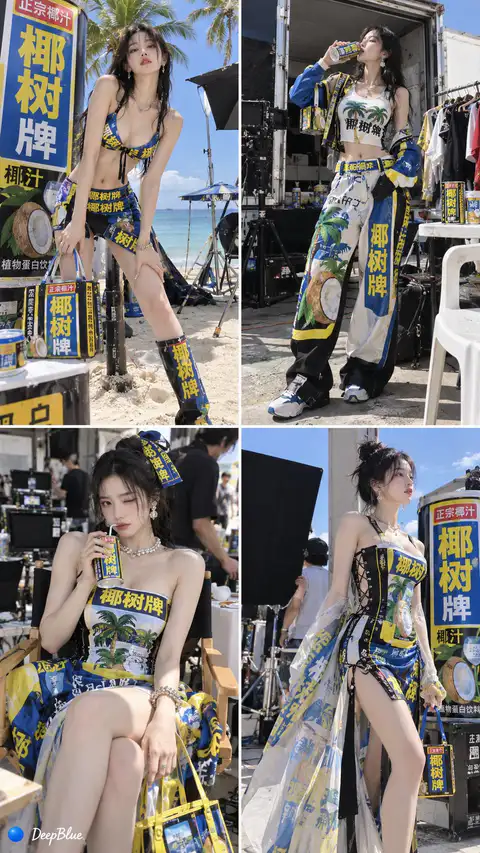
Eastern Mythological Deities Heavy-Color Gongbi Narrative Illustration
【神明 / 主角】:
【核心事件】:例如巡海护航 / 夜巡境内 / 点斗夺魁 / 渡海显神通
【神兽 / 配角】:
【核心法器】:
【主色调】:例如石青、朱砂、旧金、墨青、象牙白
【构图动势】:斜向推进 / 前中后纵深 / 环绕 / 上下压场 / 群像渡行
【整体气质】:庄严 / 威猛 / 怪异 / 神圣 / 慈威 / 诡谲
【画幅比例】:9:16

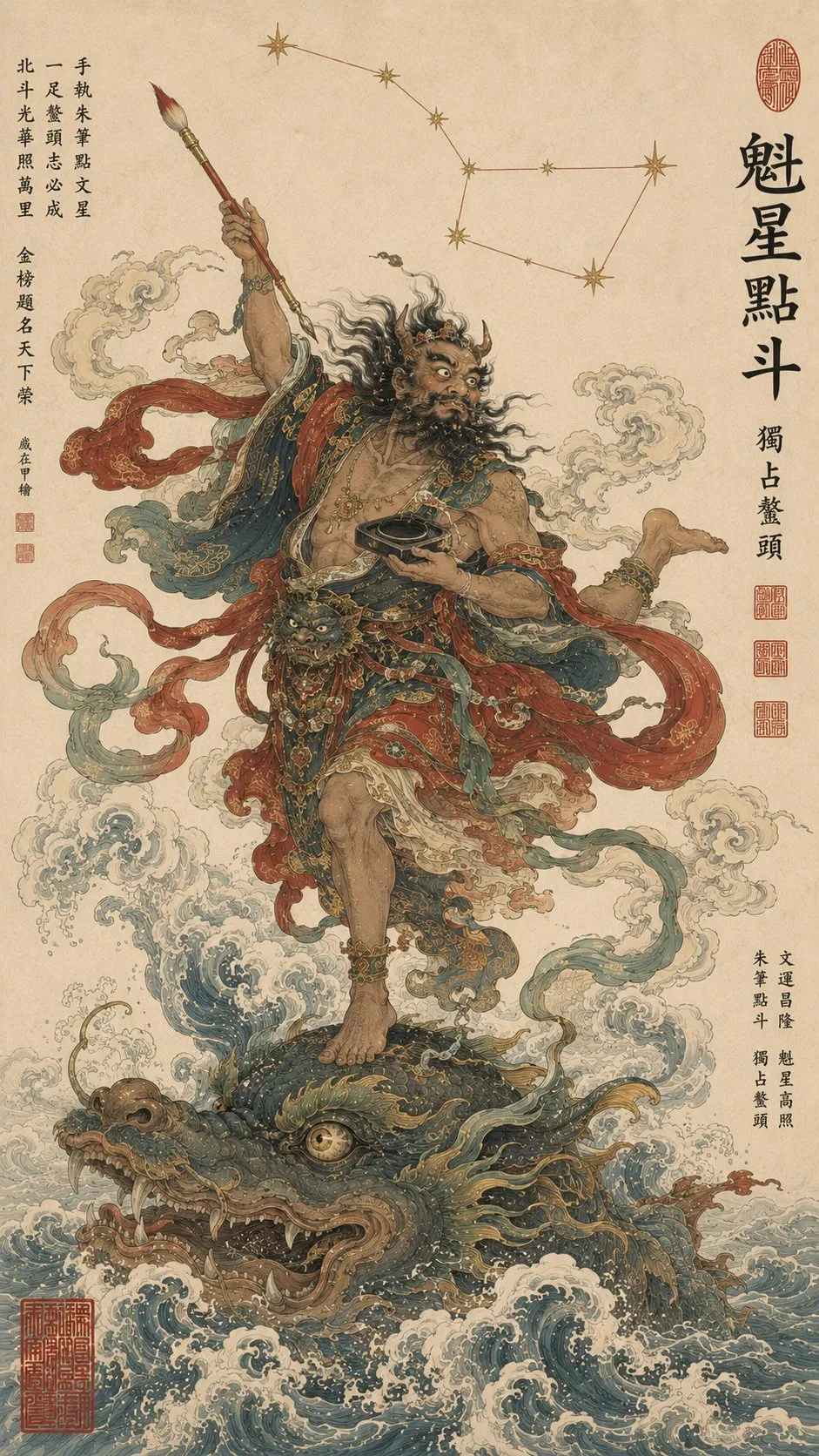
生成一幅具有完整故事情境的东方神明工笔重彩画。画面不是静态站像,而是表现【神明 / 主角】正在执行【核心事件】,让人物动作、神兽、法器、配角和场景之间形成明确的因果关系与视觉动势。

主体必须拥有清楚的大形和第一视觉重心。以【核心法器】形成一条完整、清晰的硬轴,例如长剑、神枪、金刚杵、旗杆或朱笔;再用神兽身体、锁链、披帛、胡须、海浪或云气形成 1–2 条连续柔性曲线。所有元素必须有明确来源、走势和收尾,不要只是为了装饰而堆叠。

采用“主角全色、配角减色、背景退色”的层级。主角面部、神兽头部、法器和关键甲胄区域精细刻画;配角只强化脸、手、动作和身份符号,其余颜色与线条主动减弱;背景云气、建筑、船只、远山等保持最浅,避免所有区域拥有相同信息密度。

人物采用神像化半写实造型:眼白清楚、瞳仁集中、眉峰明确,神情威严但克制,不做动漫脸、网红脸或夸张怪兽脸。人物头发、胡须与神兽毛发必须顺着体积和自然生长方向,以成束、长而连续、柔顺的工笔线描塑造,从根部自然延伸至末端。

衣袂、飘带、云气、水纹采用完整的 S 型、C 型长曲线;甲胄、头冠、服饰上的云纹、鳞纹、回纹、莲纹与卷草纹采用完整、连续、闭合的传统纹样。复杂感来自结构和层级,不来自大量随机短线、断点和微碎纹理。

色彩采用低饱和但饱满、均匀、连续的传统矿物重彩,以【主色调】为核心。石青、石绿、墨青、旧金、铜金、朱砂、赭红、象牙白形成明确的大色面,同一区域颜色稳定完整,深浅只跟随形体结构自然变化。

背景使用干净温润的暖象牙色宣纸,只保留极轻天然纸纤维。古意来自线描、矿物设色、宣纸、题跋和朱印,而不是褪色、污渍、黄斑或人工做旧。

画面加入传统古画题跋系统:一列神明或故事名称、一列较小副题、少量细题跋,以及 3–5 枚大小错落的朱红印章。文字属于作品的一部分,但不能压过人物与故事主体。

整体目标:强大形、顺长线、净色面、清主次、有叙事;复杂但不碎,古雅但不旧,低饱和但不褪色,像同一位画师以同一套矿物颜料和宣纸绘制的完整神话系列。
[Deity / Protagonist]:
[Core Event]: e.g., Sea Patrol Escort / Night Patrol across Territory / Guiding the Constellation to Seize First Place / Crossing the Sea Displaying Divine Powers
[Mythical Beast / Supporting Characters]:
[Core Ritual Implement]:
[Main Color Palette]: e.g., Mineral Blue, Cinnabar, Antique Gold, Inky Cyan, Ivory White
[Compositional Momentum]: Diagonal progression / Foreground-middle-background depth / Surrounding / Top-down dominant tension / Procession of figures
[Overall Demeanor]: Solemn / Mighty / Bizarre / Sacred / Benevolent and Majestic / Mysterious
[Aspect Ratio]: 9:16

Generate an Eastern mythological heavy-color Gongbi painting with a complete narrative context. The scene is not a static standing portrait, but depicts the [Deity / Protagonist] actively carrying out the [Core Event], establishing clear causal relationships and visual momentum between the figure's actions, mythical beast, ritual implement, supporting characters, and background scene.

The main subject must possess a clear silhouette and serve as the primary visual focal point. Use the [Core Ritual Implement] to form a complete, defined rigid axis—such as a long sword, divine spear, vajra, flagpole, or cinnabar brush; then employ the beast's body, chains, flowing ribbons, beard, ocean waves, or cloud vapors to form 1–2 continuous soft curves. All elements must have clear origins, courses, and endings, rather than being stacked purely for decoration.

Adopt a hierarchy of "full color for protagonist, subdued color for supporting roles, and receded color for background." Finely detail the protagonist's face, beast's head, ritual implements, and key armor zones; for supporting figures, emphasize only faces, hands, movements, and identifying symbols while deliberately weakening other colors and outlines; keep background clouds, architecture, ships, and distant mountains lightest, avoiding identical information density across all areas.

Figures adopt a semi-realistic, deity-statue aesthetic: clear sclera, focused pupils, well-defined brow ridges, dignified yet restrained expressions—avoiding anime faces, influencer looks, or exaggerated monster features. Hair, beards, and beast fur must follow volume and natural growth direction, sculpted with bundled, long, continuous, smooth Gongbi line work from roots naturally extending to tips.

Garment sleeves, flowing sashes, clouds, and water ripples utilize unbroken S-shaped and C-shaped long curves; armor, headdresses, and drapery cloud/scale/meander/lotus/arabesque motifs use complete, continuous, closed traditional patterns. Complexity arises from structure and hierarchy, not scattered short lines, breaks, or fragmented textures.

Colors feature low-saturation yet rich, uniform, continuous traditional mineral pigments centered on the [Main Color Palette]. Azurite blue, malachite green, inky cyan, antique gold, bronze gold, cinnabar, ochre red, and ivory white form well-defined color planes; colors remain steady and intact within zones, varying in depth only alongside structural form.

The background uses clean, warm ivory Xuan paper retaining subtle natural fibers. Antique flavor stems from line drawing, mineral coloring, rice paper texture, colophons, and vermilion seals, rather than artificial fading, stains, spots, or distressing.

Incorporate a traditional painting colophon system: a column for deity/story title, a column for smaller subtitles, minimal fine inscriptions, and 3–5 staggered vermilion seals. Calligraphy forms an integral part of the composition without overpowering the figures or narrative.

Overall goal: strong silhouettes, smooth flowing lines, clean color fields, clear visual hierarchy, narrative storytelling; intricate yet cohesive, archaic yet fresh, low-saturated yet rich—resembling a mythological series painted by the same master using unified mineral pigments and rice paper.
Prompt source: reply by @Larus Canus (@MrLarus) ↗
| Model | GPT Image 2 |
|---|---|
| Ratio | 9:16 |
| Style | Chinese Style |
| Author | Larus Canus (@MrLarus) |
| Original post | View on X |
A heavy-color Gongbi illustration prompt template for depicting Eastern mythological deities in narrative scenes, featuring traditional mineral pigments, rice paper texture, and calligraphy inscriptions.
How to use this prompt
- Copy the original prompt.
- Paste it into GPT Image 2.
- Generate at 9:16.
Posted on X by @MrLarus. PromptGallery only indexes it. Copyright stays with the author.