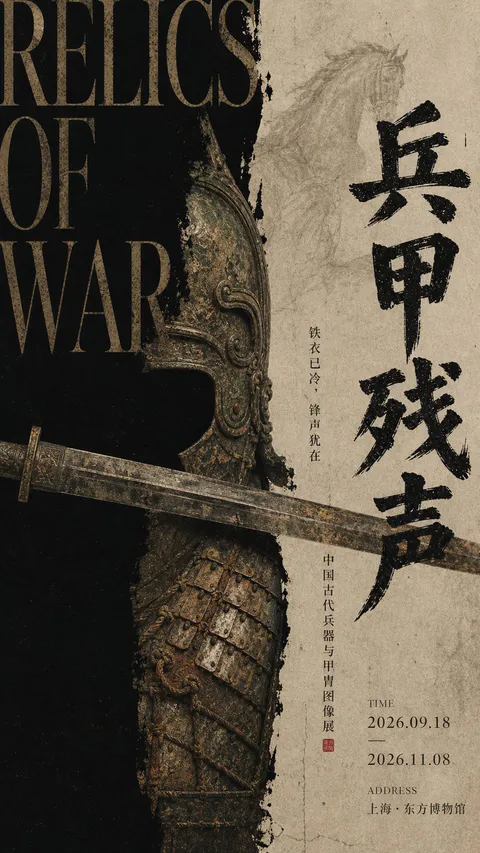
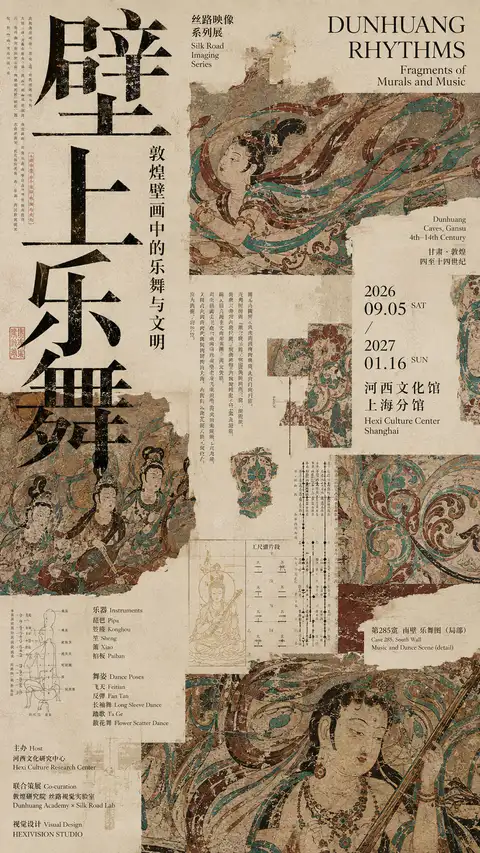
[Theme]: {Fill in a four-character Chinese idiom or phrase, e.g.: Flowing Clouds, Running Water / Picturesque Scenery / Fresh Breeze and Bright Moon}
[English Theme]: {Fill in corresponding English title}
[Exhibition Name]: {Optional, e.g.: Eastern Visual Culture Exhibition}
[Date]: {Optional}
[Venue]: {Optional}
[Aspect Ratio]: 9:16

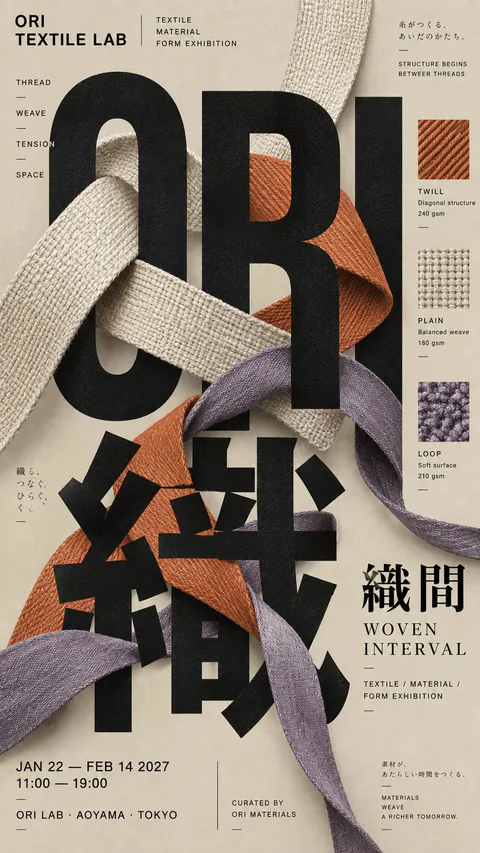
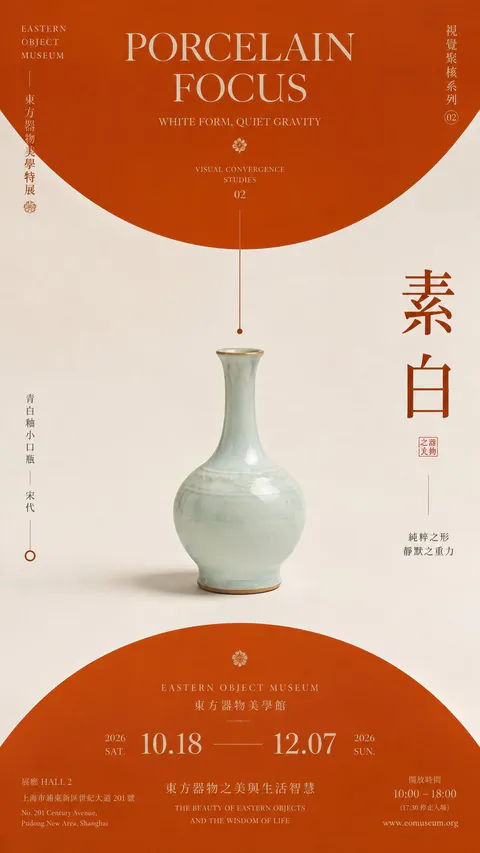
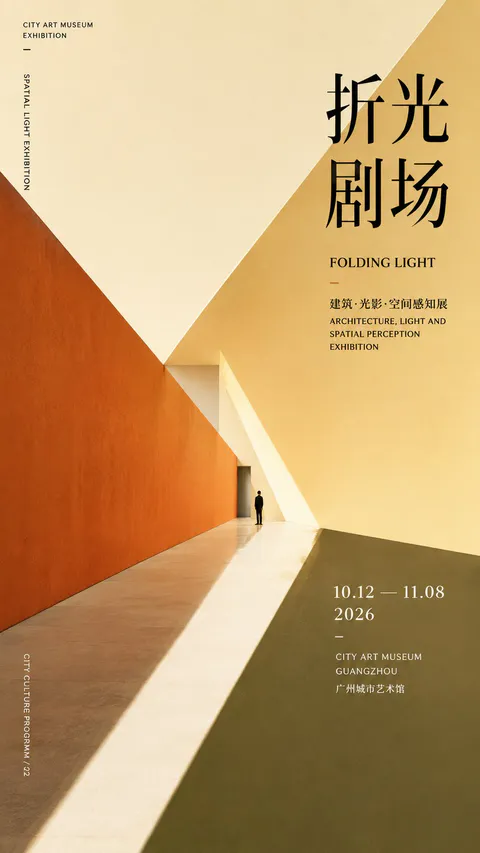
Please design a series of 4 complete contemporary Eastern cultural posters around the same [Theme]. The theme, core text, and basic exhibition information must remain consistent across all 4 posters, but each must adopt distinctly different graphic design languages. The key is not merely swapping color palettes, but altering composition, typography scale, image organization, information structure, materials, and visual rhythm, making it immediately evident that these are "four design solutions for one theme."

Reference the aesthetics of mature Eastern cultural exhibitions, art gallery visuals, editorial design, and contemporary posters, merging traditional Eastern elements with modern graphic design language. Each poster must function as a standalone, complete artwork with clear thematic expression, key visuals, auxiliary imagery, typographic hierarchy, and information systems—not just a generic background-plus-title template.

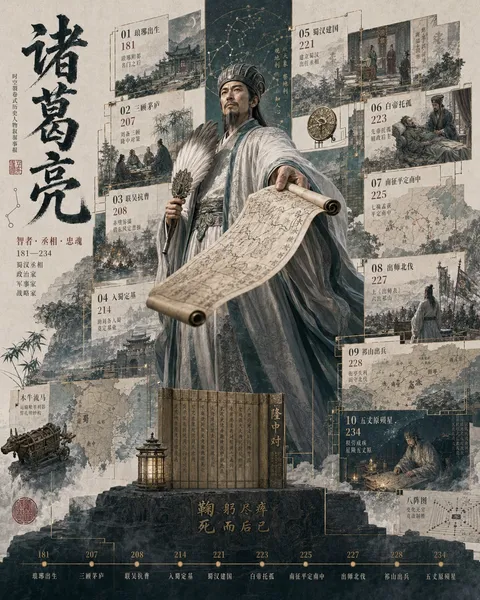
Style 1: [Ink Deconstruction Style]: Warm white rice paper, extensive negative space, oversized free calligraphy, ancient painting fragments, water ripples, mountain silhouettes, mist, and ink splatters in asymmetrical collage. Giant Chinese calligraphy serves as the structural backbone, intertwining, obscuring, and cutting through ancient painting fragments and ink textures, complemented by minimalist editorial text and vermilion seals. Predominantly monochrome with high visual tension and experimental editorial aesthetic.

Style 2: [Modern Curatorial Style]: Strict editorial grid system, oversized Chinese characters, horizontal image sample strips, and refined informational typography. Traditional Eastern nature motifs, classical painting fragments, ceramic artifacts, or photography are curated like museum archival specimens. Palette features muted combinations like off-white, forest green, celadon gray-green, and creamy yellow, turning typography into geometric structures first. Evokes professional museum and biennale design aesthetics.

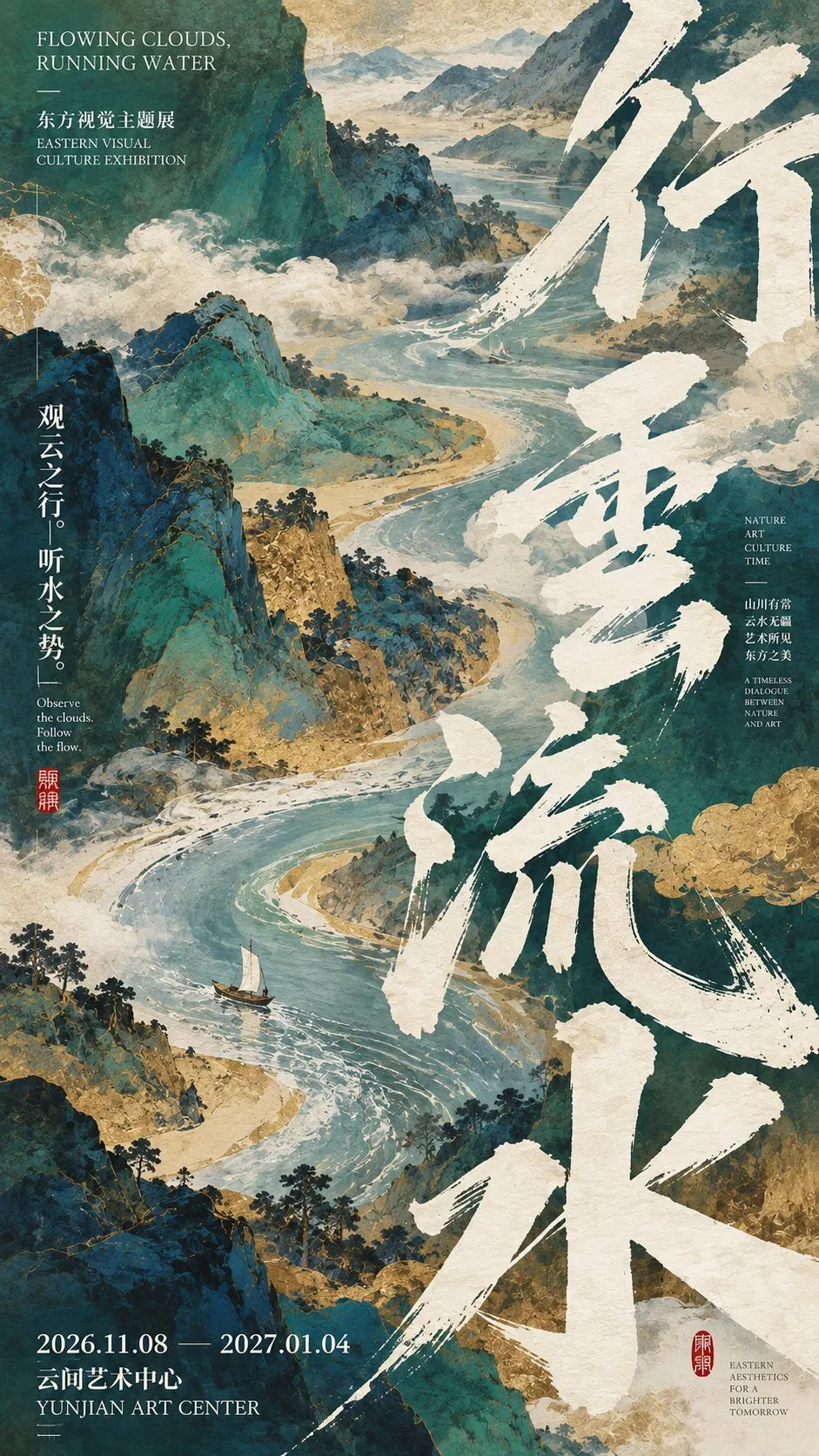
Style 3: [Color Ink & Mega Typography Style]: Mineral colors such as azurite blue, malachite green, ochre gold, slate blue, and beige form a nearly full-bleed landscape color field, with rivers, clouds, and peaks creating dynamic movement, overlaid with giant ivory-white calligraphy. The typography genuinely interacts with the landscape through overlapping and depth rather than floating on top. Strong color fields and massive characters from a distance, revealing delicate natural landscape textures up close.

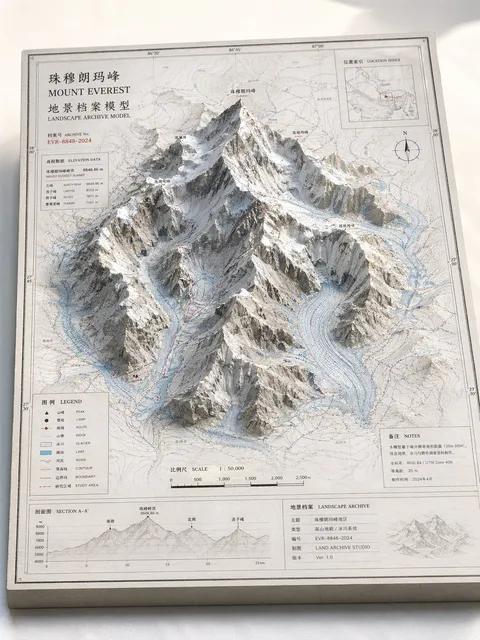
Style 4: [Dark Deconstructive Style]: Deep charcoal black background, giant modern ivory-white Chinese typography, Eastern artifacts, scholar stones, cloud patterns, ancient painting silhouettes, and fluid curves combined with restrained geometric frames, fine hairline grids, artifact annotations, and archival typography. Palette focuses on black, ivory white, celadon, antique gold, and subtle vermilion, conveying high-end contemporary art gallery vibes.

All 4 posters must maintain clear series identity with unified theme and exhibition details, yet feature stark differences in layout, focal point, typography, and image materials.

Ensure clear three-tier visual hierarchy, high information density, and professional layout integrity. Avoid cheap trendy tropes, generic UI, travel posters, simple centered text on paintings, excessive symmetry, or noisy clutter.

Generate the 4 posters independently, not combined as a 4-panel collage.
A series of contemporary Eastern cultural exhibition posters exploring four layout styles: colored ink landscape, dark deconstruction, ink collage, and modern grid curation. Ideal for cultural branding and graphic design inspiration.
How to use this prompt
Copy the original prompt.
Paste it into GPT Image 2.
Generate at 9:16.
Posted on X by @MrLarus. PromptGallery only indexes it. Copyright stays with the author.
FAQ
Which AI model is this prompt for?
The author generated it with GPT Image 2. The recommended ratio is 9:16. Similar models can run the same prompt, with different results.
How do I use this prompt?
Copy the prompt, replace any placeholder such as the subject in “Eastern Contemporary Cultural Exhibition Posters: Flowing Clouds”, and paste it into GPT Image 2.
Who owns this image and prompt?
They belong to Larus Canus (@MrLarus). Original post: https://x.com/MrLarus/status/2105968262404010131. Contact the author before commercial use.
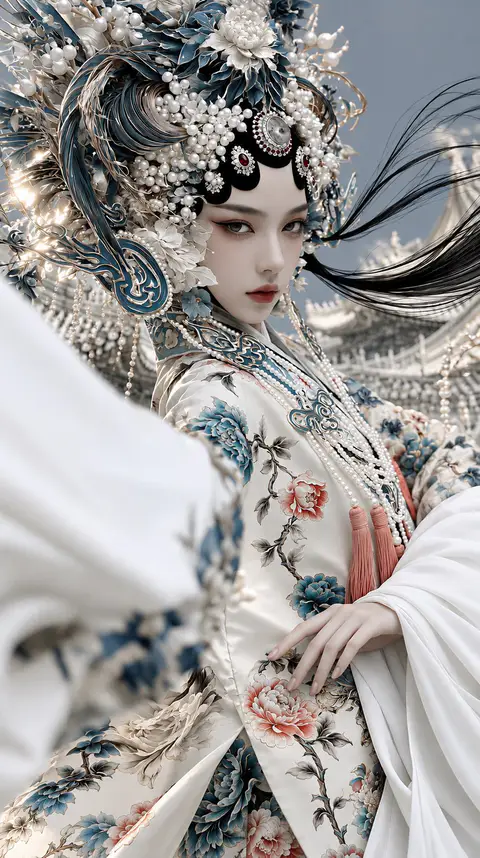
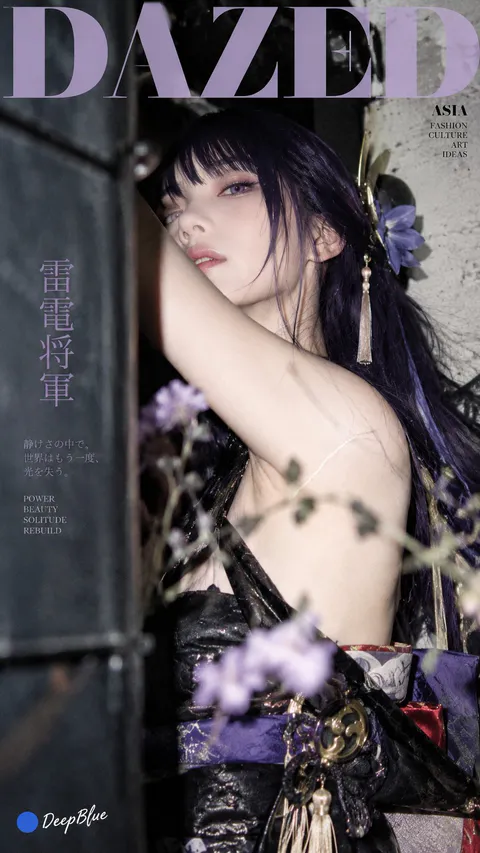
An extraordinarily beautiful young East Asian woman, ethereal Chinese imperial opera goddess, delicate porcelain face, refined facial anatomy, melancholic almond-shaped eyes, subtle smoky eyeliner, soft muted rose lips, cold and distant expression, elaborate monumental Chinese phoenix crown adorned with intricate blue enamel filigree, antique silver ornaments, countless luminous white pearls, sculpted ivory flowers, flowing metallic botanical structures, luxurious traditional Chinese ceremonial robes in ivory white silk, exquisite hand-embroidered peonies in dusty teal blue, muted coral pink and antique gold, cascading pearl necklaces, delicate coral tassels, graceful slender feminine hand resting naturally against embroidered silk, five anatomically accurate fingers, elegant finger proportions, realistic joints, natural perspective, flowing oversized white silk sleeves, long black hair blowing dramatically in the wind, ancient Chinese palace architecture softly blurred in the background, dramatic close-up fashion portrait, slightly low camera angle, sophisticated asymmetrical composition, shallow depth of field, foreground silk softly out of focus, Chinese mysticism meets European Rococo ornamentation, Old Master painting color harmony, cinematic chiaroscuro, cool blue-gray atmosphere, delicate warm highlights, realistic porcelain skin texture, intricate textile details, restrained HDR, photorealistic fine art fashion photography, 85mm portrait lens, f/1.8, extraordinary craftsmanship, museum-quality visual aesthetics, elegant and haunting beauty --ar 9:16 --v 8.2 --stylize 250 --chaos 8
【Title】[TITLE]
【Subtitle】[SUBTITLE]
【Landscape】[canyon / river / cloud mountains / glacier / desert / coast]
【Main Palette】[PRIMARY COLORS]
【Scale Anchor】[tiny traveler / canoe / boat / small building]
【Visual Destination】[moon / distant light / horizon / mountain pass]
【Aspect Ratio】9:16

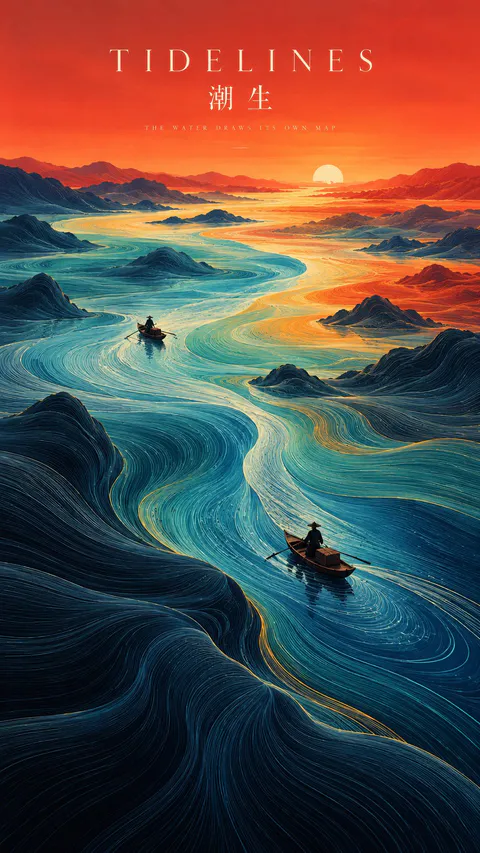
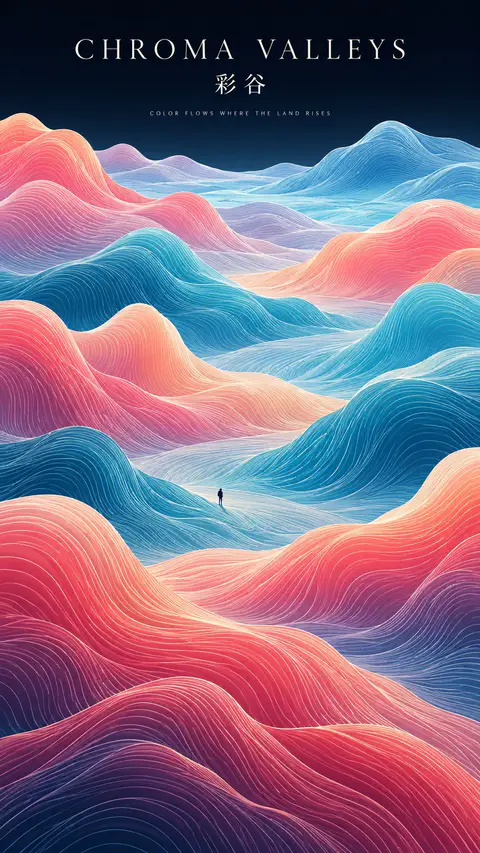
Create a refined vertical art poster that transforms a natural landscape into a flowing topographic world.

Build the terrain from hundreds of long, smooth, continuous contour lines that follow the shape, depth, and movement of the land. The lines should feel like a fusion of topographic maps, silk threads, and abstract Chinese landscape painting — directional, elegant, and highly organized rather than random decorative waves.

Use one strong visual path, such as a river, valley, ridge, cloud road, or negative-space corridor, to guide the eye from foreground to distance.

Keep the natural environment monumental and place only one or two extremely small human figures, boats, or architectural elements as scale anchors.

Use clear spatial hierarchy:
dense flowing lines in the main terrain,
calmer negative space around the visual path,
simpler and softer details in the distance.

Control the palette with 2–4 dominant colors rather than evenly distributed rainbow tones. Use large, clean color fields and let color changes reinforce depth and movement.

Add minimal editorial typography:
[TITLE]
[SUBTITLE]
[SHORT POETIC LINE]

Typography should feel like a contemporary exhibition poster or art-book cover — elegant, widely spaced, restrained, and secondary to the landscape.

The final image should feel poetic, monumental, calm, and highly designed, combining Eastern landscape aesthetics, contour-line abstraction, negative space, and modern editorial composition.
SOURCE & OUTPUT
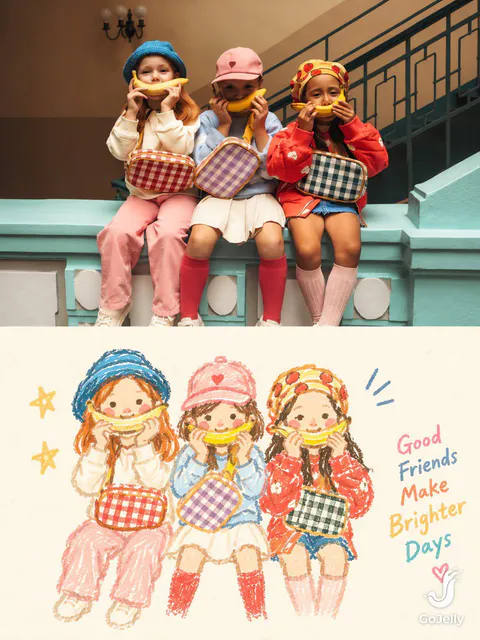
Use each uploaded photo as the sole visual reference. Create one independent, high-end editorial poster per photo and output each separately. Never combine images or create a collage.

FORMAT & LAYOUT
Use a strict vertical 3:4 composition divided into two exactly equal horizontal halves (50/50).

UPPER HALF — ORIGINAL PHOTOGRAPH
Preserve the original photograph faithfully, including the subject’s identity, facial features, structure, pose, proportions, natural texture, lighting, and color atmosphere. Apply only subtle premium editorial color grading for an art-magazine or exhibition-photography aesthetic. If necessary, extend only the surrounding background naturally to fit the frame. Never distort, replace, or redesign the subject.

LOWER HALF — PASTEL CRAYON MEMORY
Reinterpret the photograph as a minimalist, retro paper-texture pastel crayon doodle. Identify the scene’s most memorable subject, pose, relationships, direction, emotional tone, and visual essence. Reconstruct only these defining elements rather than copying every object or illustrating the entire scene.

Use thick, loose, grainy, hand-drawn chalk-and-crayon outlines with dry pigment texture, subtle breaks, faded patches, imperfect edges, slight hand wobble, and naturally rounded stroke endings. Add only a few simple pastel color blocks, stripes, dots, or scribbles to suggest essential details. Avoid realistic volume, detailed rendering, and excessive shading.

COMPOSITION & NEGATIVE SPACE
Keep the illustration small and visually balanced within the lower half, surrounded by generous empty space. Position the subject naturally according to the original photograph, allowing asymmetry, off-center placement, suspended elements, or partial cropping where appropriate.

Include only a few tiny environmental clues or abstract doodles, drawn in the same rough, simplified crayon style. Keep them minimal, imperfect, and contour-based. Prioritize breathing room, scale contrast, visual rhythm, and intentional emptiness. Never overcrowd the composition.

BACKGROUND & COLOR PALETTE
Use a bright, near-white paper background: ivory, cream white, pale off-white, soft apricot white, or very light gray-white. Add only subtle paper fibers and fine grain. Keep the background clean, bright, and clearly lighter than the illustration. Avoid dirty gray, dark yellow, or aged brown paper.

Extract 2–4 defining colors from the original photograph and reinterpret them as fresh, soft pastel crayon tones, such as peach pink, apricot orange, cream yellow, mint green, sky blue, or pale lavender. Use sufficiently distinct coral, blue, blue-green, warm orange, or violet outlines for clear contrast. Maintain a gentle, playful, emotionally warm, and refined palette.

OPTIONAL TEXT
Add only a tiny handwritten note if it genuinely enhances the composition. Keep it sparse, legible, secondary, and unobtrusive. Never use decorative text as filler.

FINAL AESTHETIC
Create a sophisticated editorial poster combining authentic photography above with a reduced, recognizable, hand-drawn memory of the same scene below. The illustration should feel airy, naive without being childish, playful without looking cheap, and minimal without losing the photograph’s identity or emotional meaning. Emphasize expressive linework, selective color, paper texture, asymmetry, and negative space.
【Landscape】[LANDSCAPE]
【Line Structure】[LAYERED / FLOWING / RADIATING / DIRECTIONAL]
【Palette】[COLORS]
【Scale Anchor】[TINY FIGURE / FLAG / BOAT / TENT]
【Aspect Ratio】9:16

Create a refined vertical art poster that transforms the landscape into an abstract **contour-line world**.

Build the terrain primarily from long, smooth, continuous lines that follow its volume, direction, elevation, and movement.

The lines should become the landscape itself, not simply decorate its surface.

Use one clear structural system and strong line-density variation, with dense lines around major forms and more breathing room in calmer areas.

Use 2–5 related colors and let the colors flow naturally along the contour structure.

Keep the landscape monumental and use only one tiny scale anchor.

Add minimal editorial typography:

[TITLE]
[SUBTITLE]
[SHORT POETIC LINE]

High-end exhibition-poster aesthetic, abstract Eastern landscape feeling, strong thumbnail readability, large graphic forms, controlled negative space, and highly visible contour-line structure.