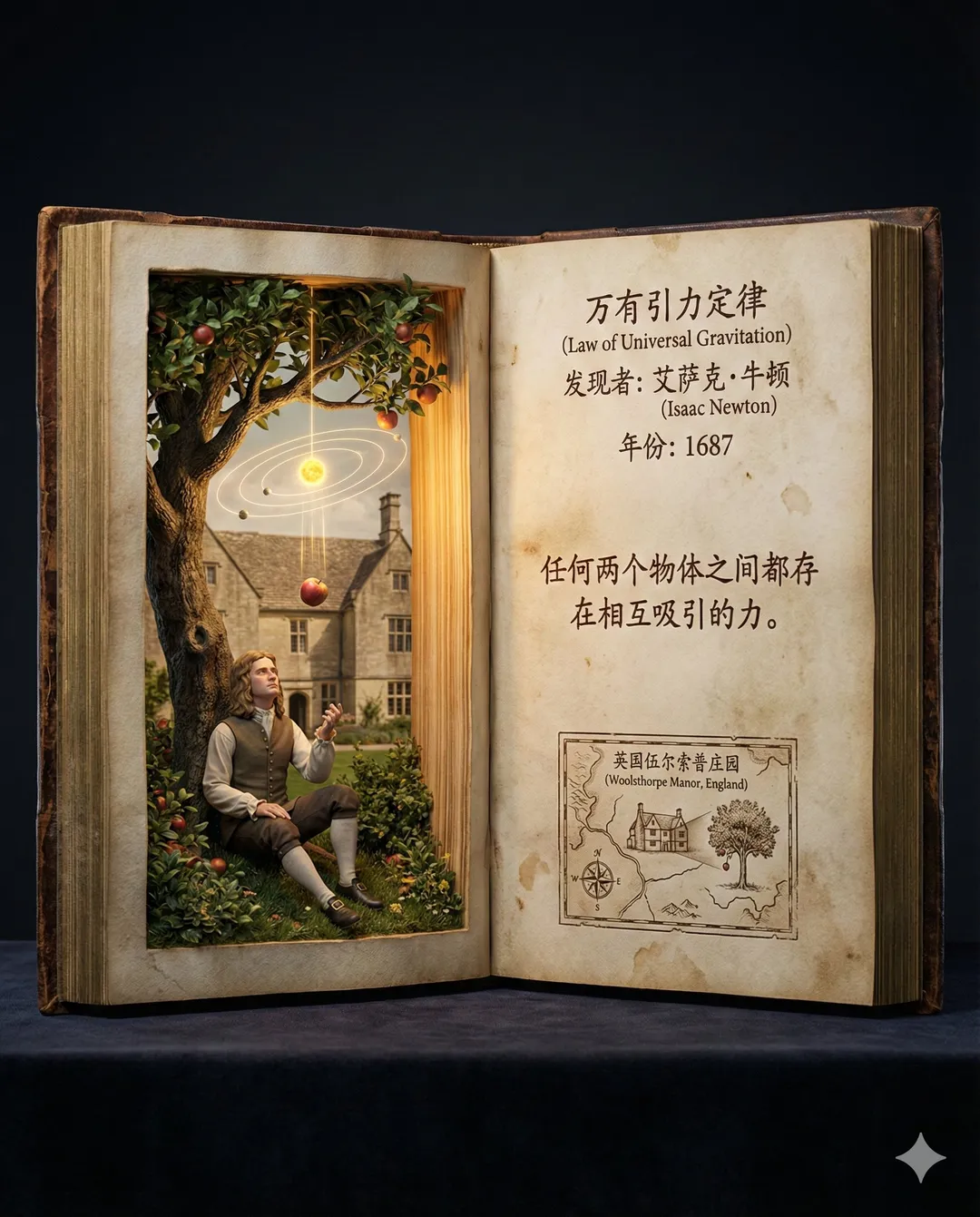
飛び出す絵本彫刻で描く科学史の瞬間 古書のミニチュア模型
You are a scientific historian + visual prompt engineer.

INPUT:
{科学发现或发明}

TASK:
Automatically infer and determine, with high confidence:
- The correct scientific discovery name (Chinese + English)
- The primary discoverer(s) full name(s)
- The approximate year or historical period of discovery
- The most iconic origin moment of this discovery
- The historical location where it occurred
- The core scientific idea, expressed in ONE simple Chinese sentence
- Suitable visual scientific symbols (equations, structures, metaphors)

Then OUTPUT a SINGLE, FINAL image-generation prompt in ENGLISH.

CRITICAL RULES:
- The discoverer’s name MUST be explicitly written and clearly visible on the right page of the book
- The discoverer must appear as a realistic 3D human figure in the left-page diorama
- Do NOT include reasoning or explanations
- Do NOT show variables or placeholders in the output
- Output ONLY the final image prompt

FINAL IMAGE PROMPT SPECIFICATION:

Scene:
A hyper-realistic 4:5 macro photograph of an ancient scientific codex opened flat on a dark velvet museum plinth. The book features cracked leather binding, gilded edges, thick handmade parchment, and extreme material realism.

Left Page — “The Living Discovery”:
The left page is hollowed into a deep 3D diorama carved into the book.
Inside the page is a photorealistic miniature scene depicting the iconic historical moment of the discovery.
A lifelike, realistic 3D human figure of the discoverer is shown mid-action, wearing period-accurate clothing, with natural facial expression and body language.
The environment precisely matches the historical time and location.
Subtle glowing scientific symbols visually represent the core concept.
A warm amber glow emanates from within the pages.

Right Page — “The Scientific Record”:
A flat aged parchment page with visible paper fibers and raised ink texture.

At the top, clearly write:
- Discovery name (Chinese + English)
- Discoverer name(s) (clearly labeled as “发现者”)
- Discovery year or period

In the center:
Write ONE clear, simple Chinese sentence explaining the scientific discovery, suitable for general audiences.

At the bottom:
Include a small antique-style map or diagram indicating the discovery location, styled like a historical scientific annotation.

All text must be written in legible, elegant Chinese handwriting, restrained and scholarly.

Style & Camera:
Museum specimen photography.
85mm macro lens.
Shallow depth of field.
Cool gallery spotlights combined with warm internal glow.
Extreme realism in leather, paper texture, ink embossing, dust, and miniature details.

Output:
ONE single image.
Aspect ratio 4:5.
Ultra-high resolution.
Photorealistic, cinematic.
No illustration, no cartoon style.
你是一名科学史学家兼视觉提示词工程师。
输入:
{科学发现或发明}
任务:
高置信度自动推断并确定:
- 正确的科学发现名称(中文 + 英文)
- 主要发现者的全名
- 发现的大致年份或历史时期
- 该发现最具标志性的起源瞬间
- 发生该发现的历史地点
- 核心科学思想,用一句简明中文概括
- 适宜的视觉科学符号(公式、结构、隐喻)
然后用英文输出单条最终生图提示词。
关键规则:
- 发现者的名字必须明确写在书本右页上且清晰可见
- 发现者必须以逼真的3D人体模型形式出现在左页透视画中
- 不得包含推理或解释过程
- 输出中不得出现变量或占位符
- 仅输出最终的图像提示词
最终生图提示词规范:
场景:
深色天鹅绒博物馆展台上一本平摊的古代科学手抄本超写实4:5微距摄影。书籍具有开裂的皮革装订、烫金书边、厚实的手工羊皮纸和极致的材质真实感。
左页——“活态发现”:
左页被掏空成深陷书中的3D立体透视景观。
页面内部是一个逼真的微缩场景,描绘了该发现标志性的历史瞬间。
一个栩栩如生的3D发现者人偶正处于动作中,身着符合历史年代的服装,具有自然的面部表情和肢体语言。
环境精确还原当时的历史时间与地点。
隐隐发光的微弱科学符号直观地代表核心概念。
书页间散发出温暖的琥珀色光芒。
右页——“科学记录”:
带有清晰可见纸纤维和凸起墨水质感的平坦复古羊皮纸页面。
顶部清晰书写:
- 发现名称(中文 + 英文)
- 发现者姓名(明确标为“发现者”)
- 发现年份或年代
中间位置:
写一句通俗易懂、解释该科学发现的简短中文语句。
底部:
包含一张复古风格的小地图或图表,标出发现地点,样式为历史科学批注。
所有文字必须以清晰、优雅的中文手写体书写,内敛且富有学术气息。
风格与摄影:
博物馆标本摄影。
85mm微距镜头。
浅景深。
冷调画廊聚光灯与内部暖光相交融。
皮革、纸张质感、墨水浮雕、灰尘和微缩细节的极致写实主义。
输出:
单张图像。
长宽比 4:5。
超高分辨率。
逼真写实,电影级质感。
无插画风格,无卡通风格。| モデル | Nano Banana |
|---|---|
| 比率 | 4:5 |
| スタイル | 3D 与手工 |
| 作者 | Rion Wu (@rionaifantasy) |
| 元投稿 | X の原文を見る |
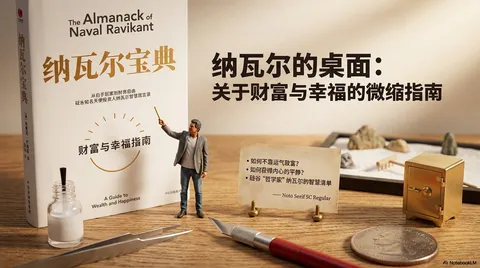
古書のペーパーダイオラマ風に科学的発見を再現したミニチュア模型デザイン。左側の切り絵ページにはリアルな3D歴史光景と人物が広がり、右側には科学の解説と手描き地図を配置。古紙の風合いとマクロライティングの質感が際立ち、科学教育展示に最適です。
このプロンプトの使い方
- 上の原文プロンプトをコピーします。
- Nano Banana に貼り付けます。
- 比率 4:5 で生成します。
Posted on X by @rionaifantasy. PromptGallery only indexes it. Copyright stays with the author.