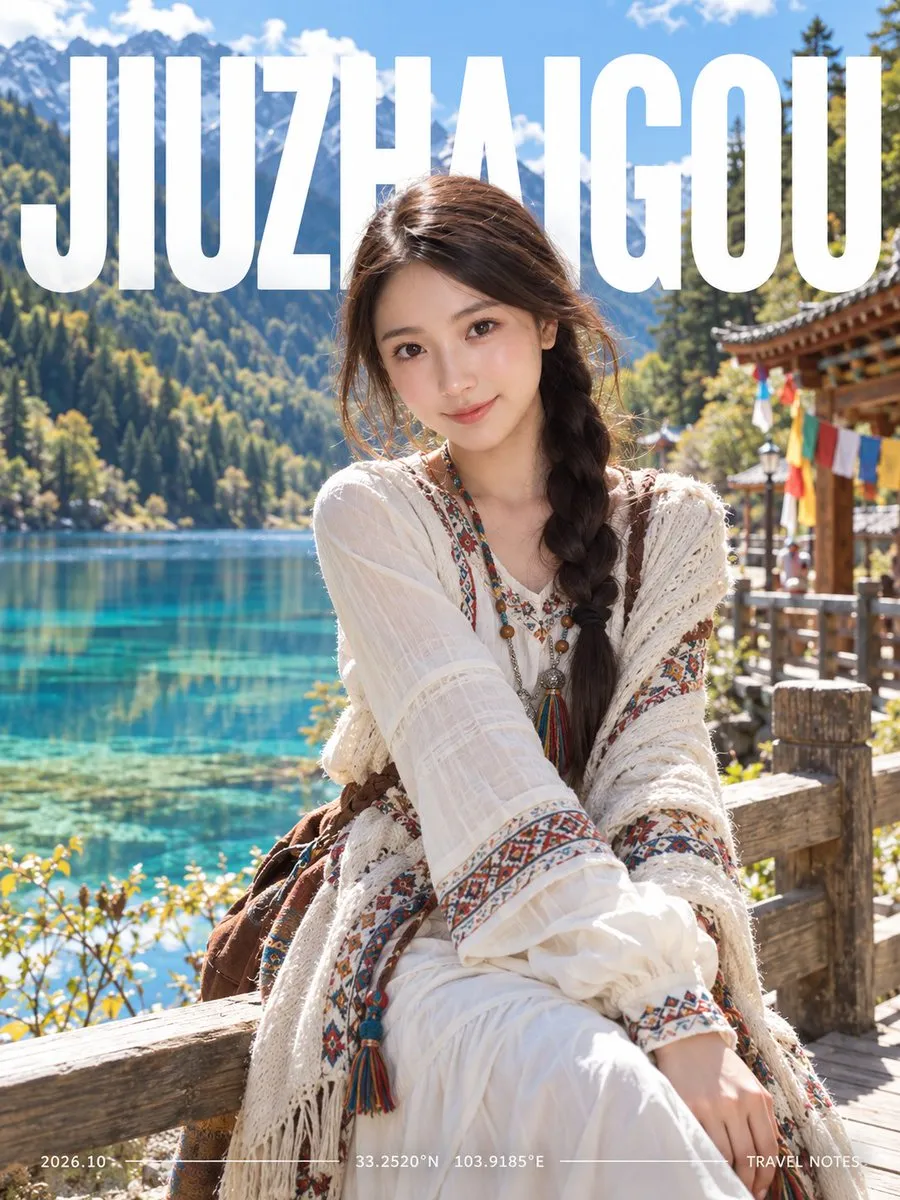
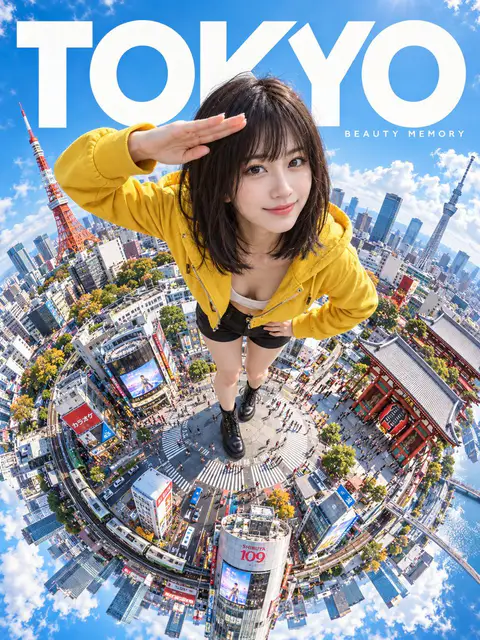
Destination: [Ho Chi Minh] [Nagoya] [London] [Jiuzhaigou].
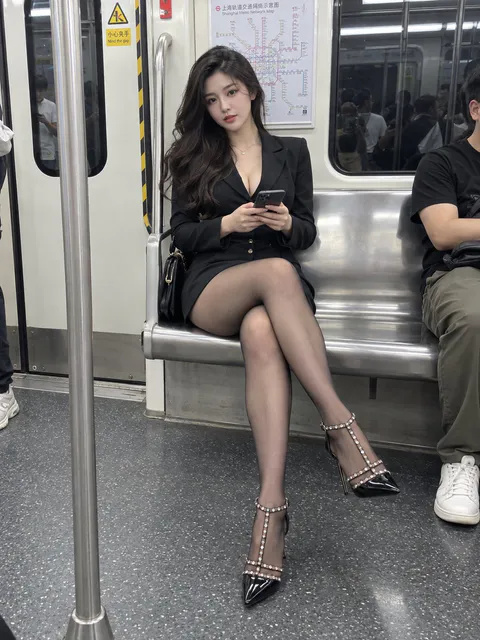
Using the uploaded photo as the sole identity reference, redesign the photo into a sophisticated 4-panel city travel magazine cover. Retain authentic facial features while matching local travel attire and natural poses. The background should showcase recognizable yet uncluttered [relevant streets and traditional architecture]. Vertical 3:4 aspect ratio, generous negative space with sky or architecture, a massive sans-serif "City/Country English" header positioned behind the subject—partially obscured naturally by head and body. Minimalist date, coordinate typography, and "TRAVEL NOTES" along the bottom, Japanese editorial photography.
A Japanese editorial travel magazine cover template using a portrait reference. It places the subject in local fashion against iconic urban and natural backdrops (Jiuzhaigou, Ho Chi Minh, Kyoto, London) featuring bold sans-serif city typography and minimalist travel notes.
How to use this prompt
Copy the original prompt.
Paste it into GPT Image 2.
Generate at 3:4.
Posted on X by @nima2qisi2. PromptGallery only indexes it. Copyright stays with the author.
FAQ
Which AI model is this prompt for?
The author generated it with GPT Image 2. The recommended ratio is 3:4. Similar models can run the same prompt, with different results.
How do I use this prompt?
Copy the prompt, replace any placeholder such as the subject in “City Travel Magazine Cover Portrait Template”, and paste it into GPT Image 2.
Who owns this image and prompt?
They belong to Dmiao豆苗啊 (@nima2qisi2). Original post: https://x.com/nima2qisi2/status/2107324720517369953. Contact the author before commercial use.
【Title】[TITLE]
【Subtitle】[SUBTITLE]
【Landscape】[canyon / river / cloud mountains / glacier / desert / coast]
【Main Palette】[PRIMARY COLORS]
【Scale Anchor】[tiny traveler / canoe / boat / small building]
【Visual Destination】[moon / distant light / horizon / mountain pass]
【Aspect Ratio】9:16

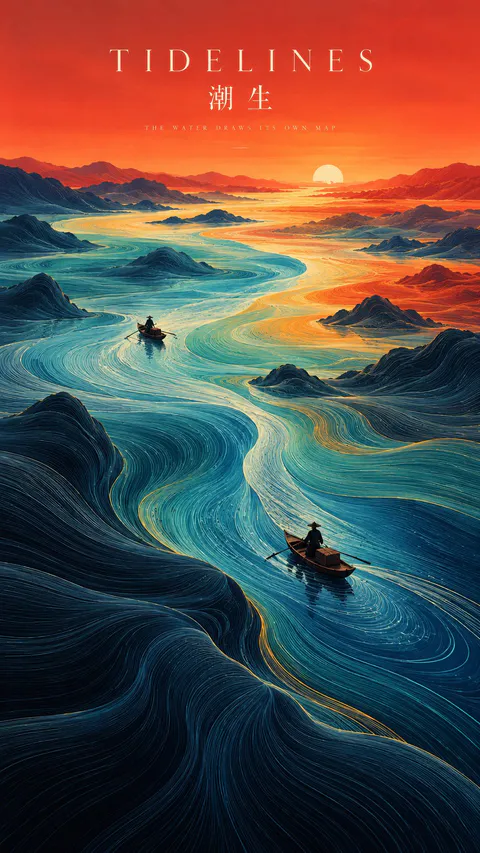
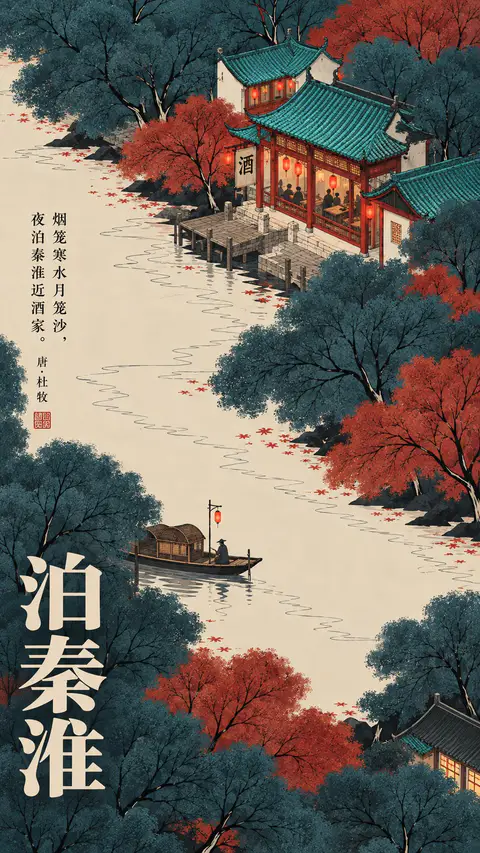
Create a refined vertical art poster that transforms a natural landscape into a flowing topographic world.

Build the terrain from hundreds of long, smooth, continuous contour lines that follow the shape, depth, and movement of the land. The lines should feel like a fusion of topographic maps, silk threads, and abstract Chinese landscape painting — directional, elegant, and highly organized rather than random decorative waves.

Use one strong visual path, such as a river, valley, ridge, cloud road, or negative-space corridor, to guide the eye from foreground to distance.

Keep the natural environment monumental and place only one or two extremely small human figures, boats, or architectural elements as scale anchors.

Use clear spatial hierarchy:
dense flowing lines in the main terrain,
calmer negative space around the visual path,
simpler and softer details in the distance.

Control the palette with 2–4 dominant colors rather than evenly distributed rainbow tones. Use large, clean color fields and let color changes reinforce depth and movement.

Add minimal editorial typography:
[TITLE]
[SUBTITLE]
[SHORT POETIC LINE]

Typography should feel like a contemporary exhibition poster or art-book cover — elegant, widely spaced, restrained, and secondary to the landscape.

The final image should feel poetic, monumental, calm, and highly designed, combining Eastern landscape aesthetics, contour-line abstraction, negative space, and modern editorial composition.